
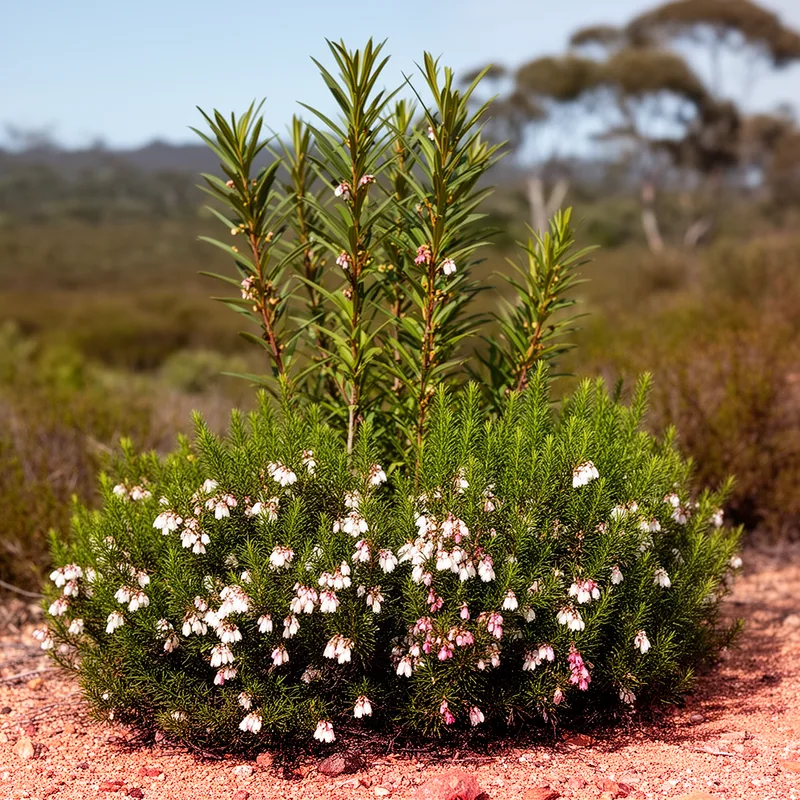
Epacridaceae
- noun
- /ˌɛpəˈkrɪdeɪʃiˌi/
- Specialized
 :
Epacridaceae
:
Epacridaceae
- Many plants formerly classified in the Epacridaceae are now considered part of the Ericaceae family.
Examples
-
The gardens featured a diverse selection of Epacridaceae species native to Australia and New Zealand.
-
During his expedition, the botanist encountered several rare members of the Epacridaceae in the Tasmanian wilderness.
-
The Epacridaceae family includes many unique Australian plants.
-
Have you ever seen an Epacridaceae shrub in bloom?
-
The gardens featured a diverse selection of Epacridaceae species native to Australia and New Zealand.
-
Many plants formerly classified in the Epacridaceae are now considered part of the Ericaceae family.
-
During his expedition, the botanist encountered several rare members of the Epacridaceae in the Tasmanian wilderness.
Synonyms

A family of shrubs and small trees from Australia and nearby islands with delicate flowers
Surface Forms
Morphology
Epacridaceae = Epacris (opaque) = Epacris + aceae
Formed from the genus name Epacris + the botanical family suffix -aceae; the taxonomic construction is not derivable by an average B1 learner.
Etymology
Epacridaceae comes from the plant name Epacris and the family ending -aceae. The name Epacris comes from Greek parts epi- 'on' and akros 'top', because these plants were often found on hilltops or the edges of cliffs. So Epacridaceae is the name for that group of shrubs, which are now usually placed in the heath family.

