
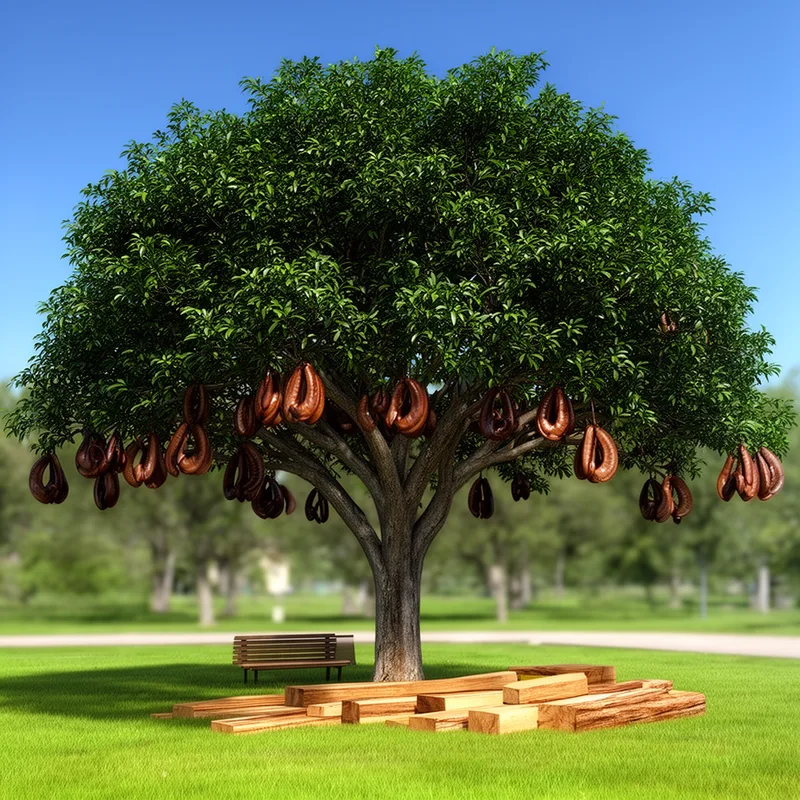
Enterolobium cyclocarpa
- noun
- Specialized
- The Enterolobium cyclocarpa is valued for its broad canopy, which provides excellent shade in city parks.
Examples
-
Artisans use timber from the Enterolobium cyclocarpa to create furniture and decorative woodwork.
-
Farmers often plant Enterolobium cyclocarpa to prevent soil erosion and improve the landscape.
-
The Enterolobium cyclocarpa is often found in tropical rainforests.
-
Many gardeners choose the Enterolobium cyclocarpa for its shade.
-
Artisans use timber from the Enterolobium cyclocarpa to create furniture and decorative woodwork.
-
Farmers often plant Enterolobium cyclocarpa to prevent soil erosion and improve the landscape.
-
The Enterolobium cyclocarpa is valued for its broad canopy, which provides excellent shade in city parks.
Synonyms

A large tropical tree with curled fruits that gives good shade and strong wood
Surface Forms
Morphology
Enterolobium + cyclocarpa
This is a Latin binomial (genus + species) used as a taxonomic name rather than a normal compositional English phrase; the species epithet 'cyclocarpa' is not a common English word and is listed as not found in the dictionary. B1 learners who know the genus label still cannot derive the full meaning (a particular tree species with specific fruit/traits) from ordinary English composition rules, so the expression is opaque.
Etymology
Enterolobium cyclocarpa comes from old Greek parts: entero- and lobium meaning 'intestine' or 'lobe', and cyclo- and -carpa meaning 'round fruit'. That image of twisted, ear-shaped pods helps explain why the name refers to the tree with coiled seed pods and a wide, shady crown.

