
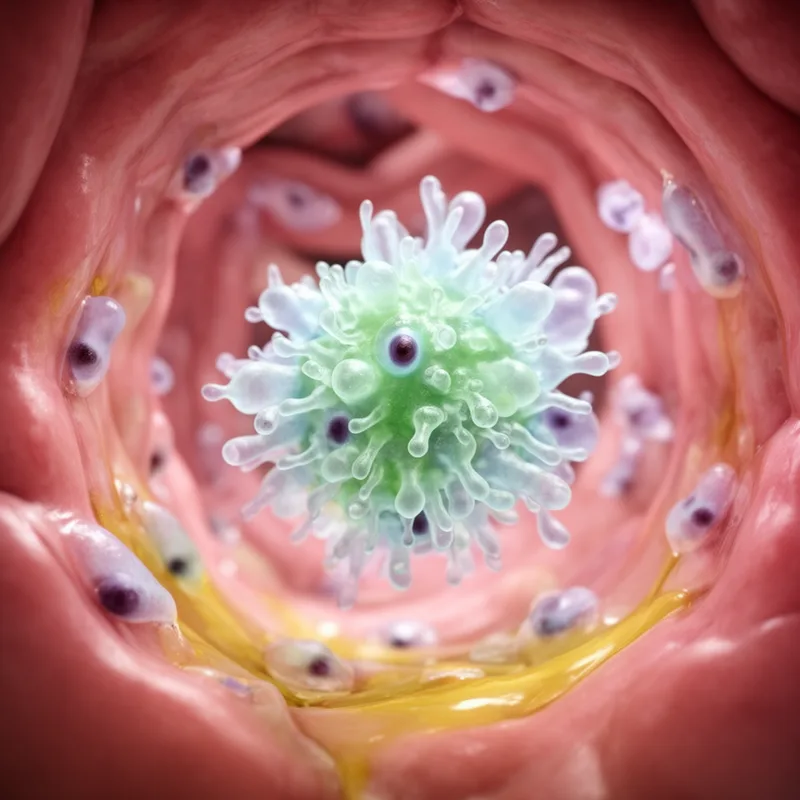
Endamoebidae
- noun
- /ˌɛndəˈmiːbɪdeɪ/
- Specialized
- The Endamoebidae family includes several species that can infect humans.
Examples
-
The spread of diseases caused by Endamoebidae can be reduced with proper sanitation.
-
Researchers studied the life cycle of Endamoebidae in laboratory animals.
-
Members of the Endamoebidae family are known to cause intestinal infections in humans.
-
Did you know that Endamoebidae are often found in contaminated water?
-
Members of the Endamoebidae family are known to cause intestinal infections in humans.
-
The Endamoebidae family of parasites can be particularly dangerous to those with weakened immune systems.
-
Infections caused by Endamoebidae can lead to severe gastrointestinal symptoms in infected individuals.
Surface Forms
Etymology
The word Endamoebidae comes from the parts endo- meaning 'inside', amoeba meaning 'a single cell that can change shape', and the family ending -idae. So Endamoebidae are a family of amoebas that live inside animals, often in the gut, which is why they can cause intestinal infections.

