

Elamite language
- noun
- He studied tablets written in the Elamite language while researching ancient Iran.
Examples
-
Few inscriptions in the Elamite language have survived from ancient Elam.
-
Scholars find the origins of the Elamite language difficult to classify among known families.
-
The Elamite language was used in ancient inscriptions.
-
The Elamite language is considered extinct.
-
Few inscriptions in the Elamite language have survived from ancient Elam.
-
He studied tablets written in the Elamite language while researching ancient Iran.
-
Scholars find the origins of the Elamite language difficult to classify among known families.
Synonyms



 1
9.9
People once spoke an old language in southwest Iran that is now extinct

An extinct language once spoken by ancient people in the southwest of Iran
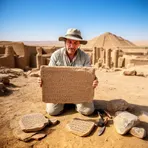
A language people spoke long ago in Susa in the southwest of Iran that no one speaks now

An extinct language once spoken by the Elamites
Surface Forms
Morphology
The phrase is directly compositional: 'Elamite' names the Elamite people/language and 'language' denotes a system of communication, so the combined meaning ('the language of the Elamites') is predictable from the parts. This adjective + noun naming pattern is cross-linguistically common and would be understandable to a B1 learner who knows both constituents.
Etymology
The name Elamite language comes from the ancient people and region called Elam, and 'Elamite' simply means 'from Elam'. Only a few old writings survive, so the language is very old and 'no longer spoken' today, which is why experts find it hard to place with other languages.