
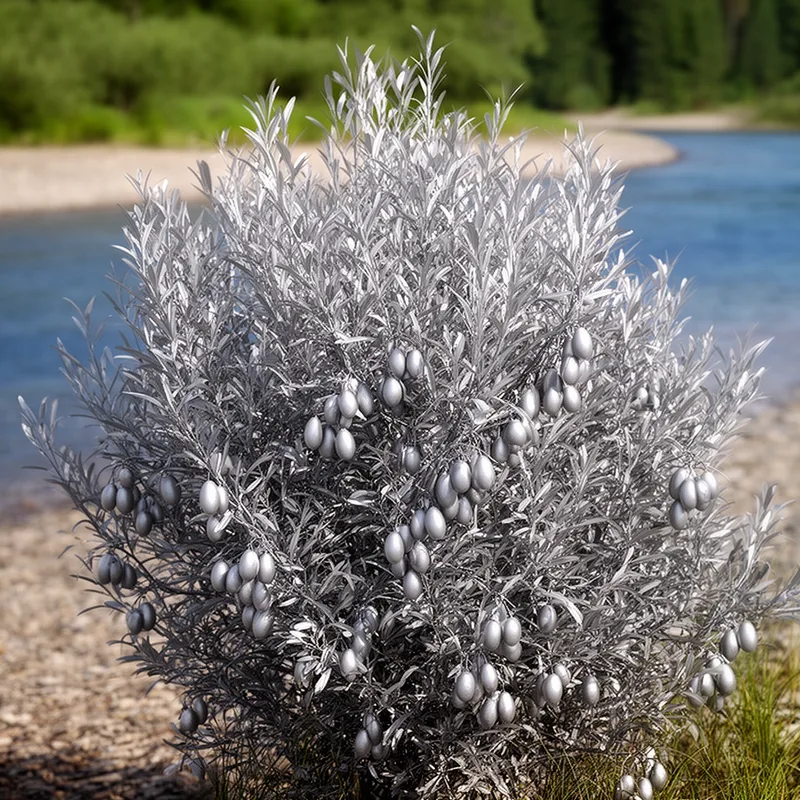
Elaeagnus commutata
- noun
- Specialized
- The silver leaves of Elaeagnus commutata make it an attractive addition to gardens.
Examples
-
Birds are attracted to the silvery fruit produced by Elaeagnus commutata in late summer.
-
Native Elaeagnus commutata shrubs are often found along riverbanks in the northern United States and Canada.
-
The Elaeagnus commutata is known for its silvery leaves.
-
Many gardeners choose Elaeagnus commutata for its beauty.
-
The silvery fruit of Elaeagnus commutata provides food for many bird species during autumn.
-
In early spring, Elaeagnus commutata flowers add beauty to gardens with their delicate blooms.
-
Gardening experts recommend Elaeagnus commutata for landscape projects due to its drought tolerance.
Synonyms

A bush with silvery leaves and small fruits that grows in dry soil in North America
A North American bush with silvery leaves and fruit that loses leaves in winter
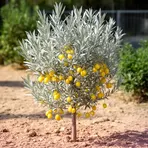
A small bush or tree with silvery leaves and small yellow fruits
Surface Forms
Morphology
Elaeagnus + commutata
This is a scientific Latin binomial (genus + species epithet) functioning as a proper name rather than a compositional English phrase. Even if a learner knows 'Elaeagnus' as a shrub, the epithet 'commutata' is a Latin label (not transparent English vocabulary), so the specific meaning 'a deciduous shrub with silvery leaves' cannot be derived from the constituents.
Etymology
Elaeagnus commutata is a plant name that comes from old words pointing to its shiny, silvery fruit and leaves. The part Elaeagnus is like the common name 'silverberry' and commutata may mean 'changed', so the name helps you remember this shrub with pale, silvery leaves and berries.

