
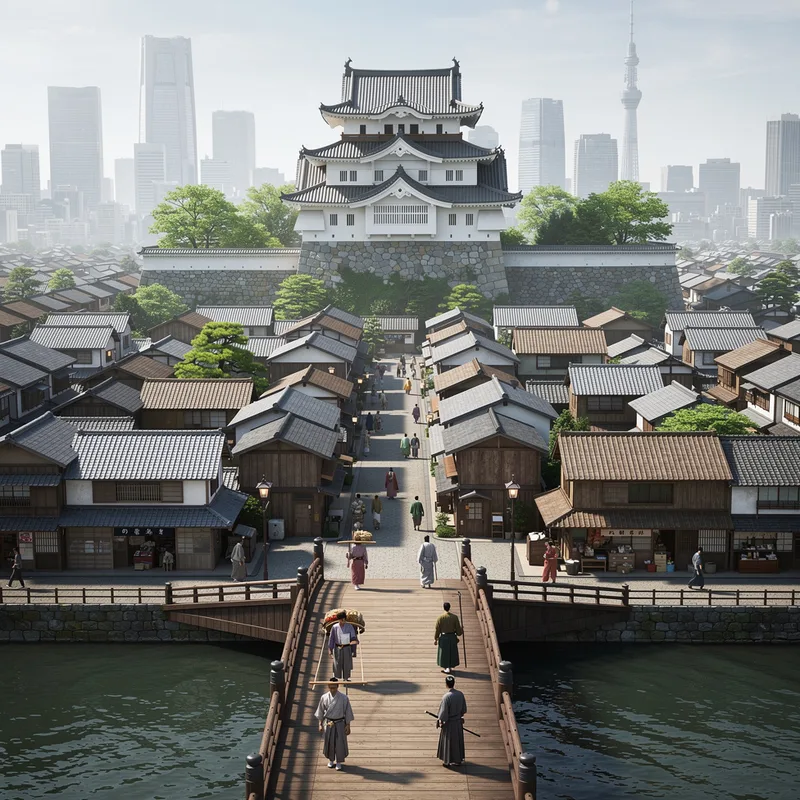
Edo
 3
8.8

- proper noun
- /ˈeɪdoʊ/
- During the Tokugawa period, Edo was the bustling capital of Japan, known for its rich culture.
- Edo Period
- Edo Japan
- Edo people
Examples
-
Her lineage was impeccable; her father was one of the wealthiest and most powerful men in Edo.
Fiction book (2000) -
"In the private audience chamber of Edo Castle, Sano Ichiro addressed Shogun Tokugawa Tsunayoshi, Japan's supreme military dictator.
Fiction book (2002) -
In the audience was a man from Edo who had come alone to see the play.
Fiction book (1996) -
Some 10 years later, I was allowed to visit Edo.
-
His plan was to take the main roads connecting Edo and Kyoto.
-
Okada Sanyemon lived in Edo, for the remaining years of his life.
-
People go back and forth, trade between Osaka and Edo, move between Kyoto and Edo.
-
That year, in Edo, they signed a treaty authorizing the export of silkworm eggs.
-
He lived in a little Hut on the outskirts of Edo, a great metropolis of a million people that grew to become present day Tokyo.
-
I enjoy Japanese prints, particularly from the Edo period (i.e., Hiroshige, Yoshitoshi, Kuniyoshi, etc.).
Blog text (34)
Synonyms
 243
1.0
The capital and largest city of Japan and its main business and cultural center

 1
9.9
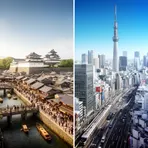
An old name for Tokyo, the capital city of Japan, used before 1868
 1
3.8
An older spelling of the name Tokyo, the capital city of Japan
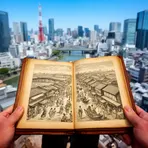
An old English name for Tokyo, the capital city of Japan
Surface Forms
Etymology
Edo was the old name for Tokyo and comes from a Japanese word meaning 'river mouth' or 'estuary', because the town grew where a river met Tokyo Bay, which is why the name belonged to that city.