
Edaphosauridae
- noun
- /ˌɛdəfəˈsɔːrɪdeɪ/
- Specialized
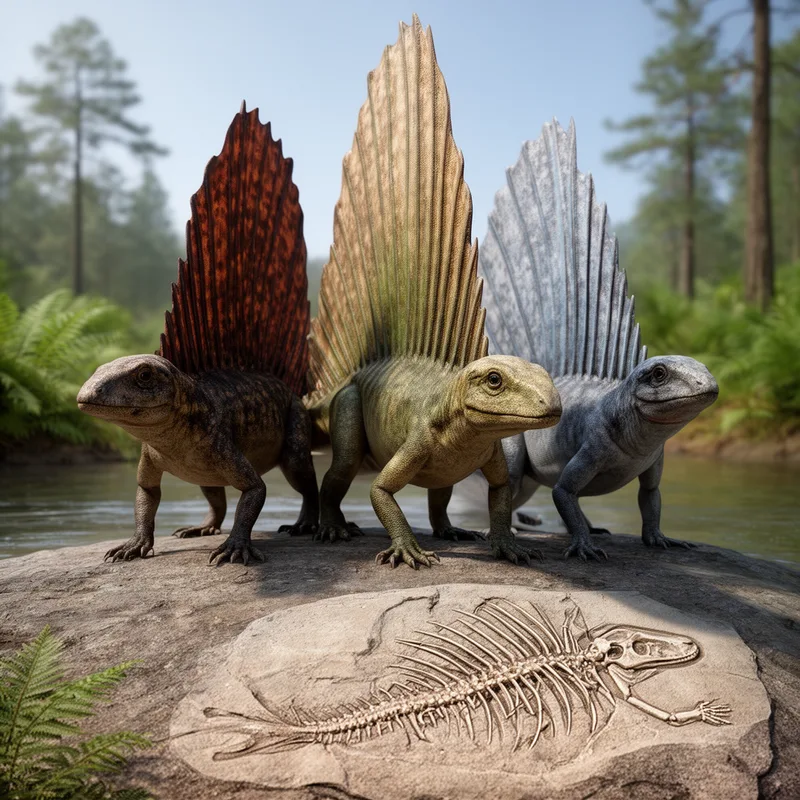
- Members of the Edaphosauridae were notable for their distinct sail-like structures along their backs.
Examples
-
The Edaphosauridae family played a significant role in early vertebrate evolution during the late Carboniferous period.
-
Fossils attributed to the Edaphosauridae have been discovered in North America and Europe.
-
The Edaphosauridae family thrived during the late Paleozoic era.
-
Many fossils of Edaphosauridae have been discovered in North America.
-
Fossils attributed to the Edaphosauridae have been discovered in North America and Europe.
-
Members of the Edaphosauridae were notable for their distinct sail-like structures along their backs.
-
The Edaphosauridae family thrived during the late Paleozoic era.
Surface Forms
Morphology
Edaphosauridae = Edaphosaurus (opaque) = Edaphosaurus + idae
This is a specialized scientific family name formed by adding the zoological suffix '-idae' to the genus name; the formation is not productive or meaningful for general learners.
Etymology
Edaphosauridae comes from Greek parts edaphos meaning 'ground' and saurus meaning 'lizard', and the ending -idae shows it is a family of animals. So Edaphosauridae is the 'ground lizard' family — extinct early reptiles known for their sail-like backs.

