

Echinochloa
- noun
- /ˌɛkɪnəˈkloʊə/
- Specialized
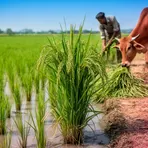
- Echinochloa is a common weed in many rice fields, competing actively with growing plants for valuable nutrients.
Examples
-
Echinochloa is commonly found in rice paddies where it may compete with the crop for nutrients.
-
The botanist collected samples of Echinochloa to study its growth patterns.
-
Some farmers cultivate certain species of Echinochloa as a source of fodder for livestock.
-
Echinochloa is often found in wetland areas.
-
Farmers sometimes plant Echinochloa for its nutritional value.
-
Farmers often use specific species of Echinochloa as a nutritious fodder option for their livestock.
-
In many tropical regions, various types of Echinochloa thrive in warm, wet environments.
Compounds
- Specialized
A coarse grass that grows each year as a common weed worldwide and is sometimes used for animal feed

- Specialized
A grass grown in Asia for its small edible seeds and for animal feed
Surface Forms
Morphology
Echinochloa = echino + chloa
A Latinized scientific compound from Greek combining forms; the components are not productive English morphemes, so learners cannot reliably infer the meaning from them.
Etymology
Echinochloa comes from Greek parts echinos meaning 'hedgehog' or 'spiny' and chloē meaning 'young grass'. The name gives a simple picture — a 'hedgehog grass' — because many plants in this group have spiky seed heads, which helps you remember this kind of grass often found in fields and rice paddies.

