

ESR


 1
6.7
1
6.7
- noun
- /iː ɛs ɑr/
- Specialized
- The doctor measured the patient's ESR to assess any underlying inflammation.
- erythrocyte sedimentation rate
- sedimentation rate (ESR)
- ESR values
Examples
-
The erythrocyte sedimentation rate (ESR) and C-reactive protein (CRP), also known as acute phase reactants, can be used to detect inflammation.
Academic text (2014) -
Her routine investigations were unremarkable except for a raised ESR of 80 mm in the first hour.
Academic text (2007) -
At 60 minutes, the dogs of all groups showed significantly different levels of ESR compared to dogs of the control group.
Academic text (2014) -
Protein count, ESR, and immunoglobulins were within normal limits.
Academic text (2004) -
The presence of infection, myeloma, and age can also raise the ESR.
Academic text (2014) -
At one year of follow-up, the patient was symptom-free with an ESR of 5.
Academic text (2007) -
Our patient only had a mild elevation of ESR and a slightly elevated eosinophil count.
Academic text (2007) -
The normal range of ESR is 4-20 mm/h for men and 10-25 mm/h for women.
Academic text (2014) -
Persistent temperature, elevated WBC and ESR counts, wound erythema, or drainage are signs of infection.
Academic text (2005) -
An elevated ESR can indicate the presence of a chronic disease or infection.
Synonyms
 1
5.6
1
5.6
A blood test that shows how fast red blood cells settle to check for inflammation
 1
6.3
1
6.3
A test that measures how fast red blood cells sink in a tube to show infection or disease
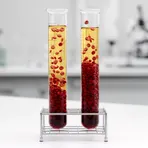
The speed at which red blood cells fall to the bottom of a test tube, showing inflammation
Surface Forms
Etymology
ESR comes from the words erythrocyte, sedimentation, and rate; 'erythrocyte' means 'red cell' and 'sedimentation' means 'settling down', so the name simply describes the blood test that measures how fast red blood cells settle.