
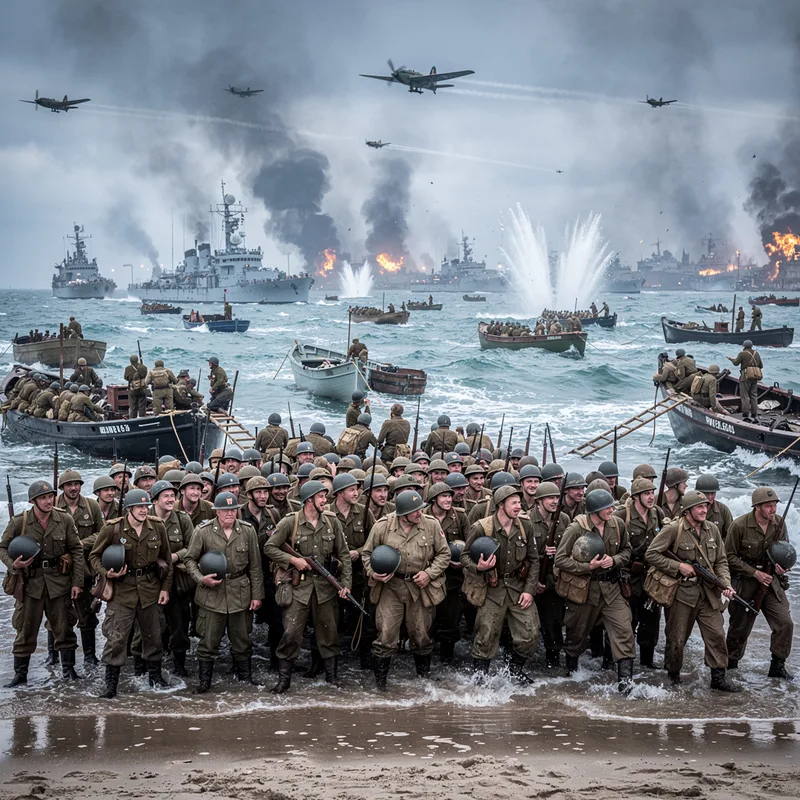
Dunkirk
 2
7.1
2
7.1

- proper noun
- /ˈdʌn.kɜrk/
- The evacuation at Dunkirk was crucial for the survival of the Allied forces during World War II.
- Dunkirk evacuation
- beaches of Dunkirk
- Battle of Dunkirk
Examples
-
At Dunkirk, when the British decided to evacuate their troops, what did they do with the French?
-
The British expeditionary forces narrowly escaped by fleeing across the English Channel aboard a makeshift armada, leaving much of their armament behind on the beaches of Dunkirk.
Academic text (2004) -
Some men across the Channel, at Dunkirk, need taking off.
-
After Dunkirk, Hitler realized he would have to strike... with an air force many times greater than the British.
-
What's left of your army abandoned its weapons at Dunkirk.
-
The unsuccessful evacuation of our armed forces from Dunkirk has resulted in over a quarter of a million of our troops stranded in occupied France.
-
Historical accounts detail the brave efforts of soldiers in the Dunkirk evacuation in 1940.
-
The events at Dunkirk highlighted the desperation of Allied troops under enemy fire.
Synonyms
A rescue of many Allied soldiers from the beaches of Dunkirk in 1940 during World War II
An evacuation in 1940 that rescues Allied soldiers from French beaches during World War II
Compounds
A rescue of many Allied soldiers from the beaches of Dunkirk in 1940 during World War II

A strong feeling of people working together and being determined in hard times
Surface Forms
Etymology
Dunkirk for the 1940 evacuation is named after the town where the big rescue happened on the beaches. The town name comes from old Dutch duin 'dune' and kerk 'church', which is why the event is simply called 'Dunkirk'.