
Drosophila melanogaster
- noun
- /ˌdrɒsəˈfiːlə ˌmɛləˈnɒɡəstə/
- Specialized
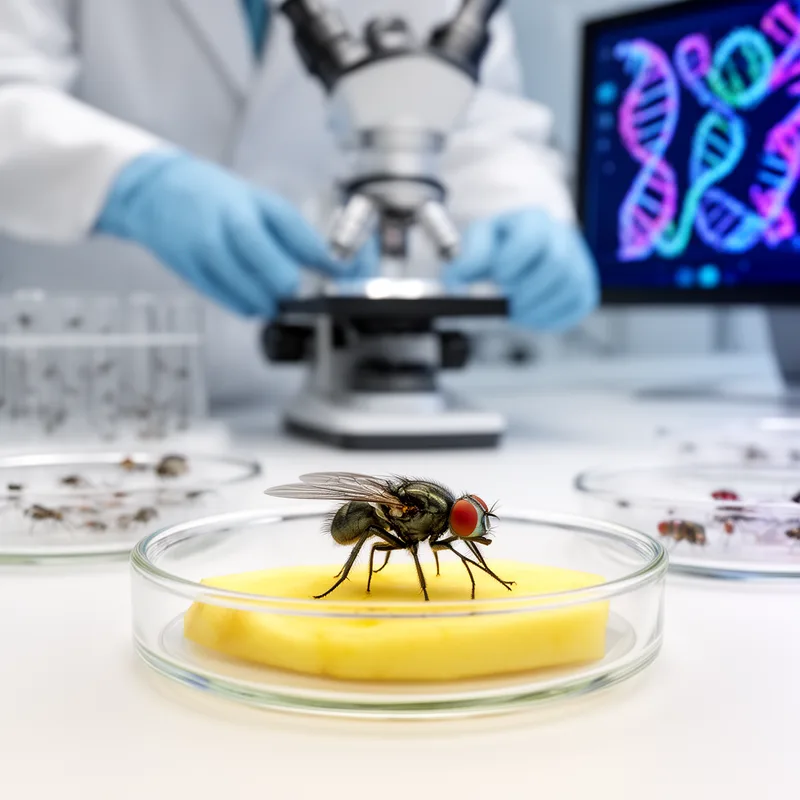
- The fruit fly, Drosophila melanogaster, is a crucial model organism in genetic research due to its short lifecycle.
- fruit fly
- fly Drosophila melanogaster
Examples
-
Scientists often use Drosophila melanogaster to study the effects of genetic mutations on development.
-
The continued expansion of tools and resources, especially for species other than Drosophila melanogaster, will be most effective when coupled with comparative approaches that reveal the genetic basis of reproductive isolation across a range of divergence times.
Academic text (2017) -
Research with Drosophila melanogaster has provided key insights into heredity and gene function.
Synonyms


 1
9.9
1
9.9
A small fruit fly used to study genes in labs
Surface Forms
Morphology
drosophila + melanogaster
The binomial combines the genus name 'Drosophila' (a small fly) with a species epithet; knowing both constituents would let a learner infer it names a particular kind of drosophila, so the taxonomic sense is partially compositional. However 'melanogaster' is a specialized Latin/Greek epithet (and is not a common English word), and the specific pragmatic information that this species is a widely used genetic model is not derivable from the parts, making it only partly transparent to a B1 learner.
Etymology
Drosophila melanogaster comes from old Greek words: drosos + phila meaning 'dew-loving' and melano + gaster meaning 'black-bellied', so the name literally paints a picture of a small, dark-bellied fly that likes damp fruit. That's why the name fits this tiny fruit fly, which is the species scientists use a lot in genetic research.