

Dracunculus vulgaris
- noun
- Specialized
- The garden’s centerpiece was a blooming Dracunculus vulgaris, attracting attention with its striking purple spathe.
Examples
-
We identified the mysterious flower as Dracunculus vulgaris after consulting a botanical guide.
-
Many people are surprised by the Dracunculus vulgaris's strong smell.
-
Gardeners often plant Dracunculus vulgaris for its unusual appearance despite its strong odor.
-
The Dracunculus vulgaris is often found in Mediterranean gardens.
-
The garden’s centerpiece was a blooming Dracunculus vulgaris, attracting attention with its striking purple spathe.
-
Gardeners often plant Dracunculus vulgaris for its unusual appearance despite its strong odor.
-
Many people are surprised by the Dracunculus vulgaris's strong smell.
Synonyms
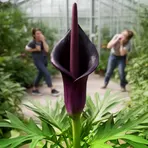
A plant with large dark purple flowers that makes a strong unpleasant smell
Surface Forms
Morphology
This is a standard Linnaean binomial combining the genus name Dracunculus (an arum with a dark spathe and odor) with the Latin epithet vulgaris (meaning widespread/typical), so the label denotes the widespread/common species of that genus. Because the meaning is a direct compositional combination of the two constituents and follows a cross-linguistically familiar scientific naming pattern, a learner who knows both parts can infer the MWE's referent.
Etymology
Dracunculus vulgaris comes from old words: Dracunculus means 'little dragon' because the dark, hood-shaped flower looks like a dragon, and vulgaris means 'common'. So the name gives a simple picture — a dragon-like plant that is fairly common, which helps you remember this unusual flower.

