
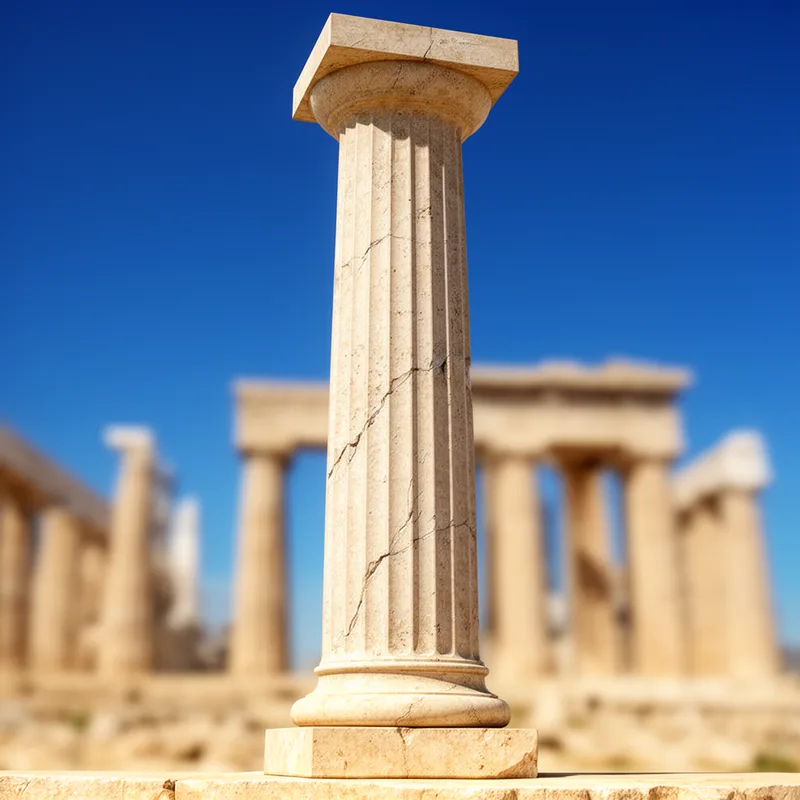
Dorian order
- noun
- /ˈdɔːriən ˈɔrdər/
- Specialized
 :
orden dórico
:
orden dórico
- The Dorian order is known for its sturdy columns and lack of decorative bases.
Examples
-
The Parthenon is a prime example of the Dorian order in ancient Greek architecture.
-
Many ancient temples in Greece feature columns designed in the Dorian order.
-
The Parthenon features the classic Dorian order.
-
Many ancient temples were built in the Dorian order.
-
The Parthenon is a prime example of the Dorian order in ancient Greek architecture.
-
Many ancient temples in Greece feature columns designed in the Dorian order.
-
The Dorian order is known for its sturdy columns and lack of decorative bases.
Synonyms

A simple ancient Greek style of building with thick columns that have no bases and plain tops
Surface Forms
Morphology
The meaning is directly compositional: 'Dorian' (relating to the Doric style or the Dorians) modifies 'order' (an architectural style), so a learner who knows both words can infer this refers to the architectural order associated with the Dorian/Doric tradition. This pattern (adjective + 'order' naming an architectural style) is transparent and cross-linguistically common, making the term accessible to B1 learners who know the constituents.
Etymology
The noun Dorian order comes from the Dorian people of ancient Greece. Builders used simple, strong columns with plain tops and usually no base, so the name now means a 'simple' and 'sturdy' style of building.

