

Dolichos biflorus
- noun
- Specialized
- Farmers use Dolichos biflorus not only as human food but also as nutritious animal fodder.
Examples
-
Farmers in India cultivate Dolichos biflorus for its seeds.
-
The seeds of Dolichos biflorus are also known as horse gram in many markets.
-
Dolichos biflorus is commonly grown in India for its protein-rich seeds.
-
The Dolichos biflorus plant thrives in tropical climates.
-
Dolichos biflorus is commonly grown in India for its protein-rich seeds.
-
Farmers use Dolichos biflorus not only as human food but also as nutritious animal fodder.
-
The seeds of Dolichos biflorus are also known as horse gram in many markets.
Synonyms
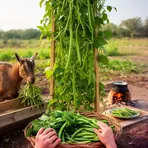
A climbing plant with leaves and beans grown for animal feed and food
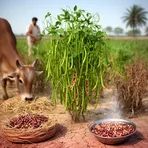
A drought-resistant bean plant grown in India for food and animal feed
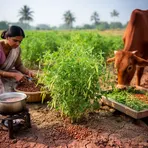
A small plant that people in India grow for its edible seeds and for animal feed
Surface Forms
Morphology
Dolichos + biflorus
This is a Latin binomial (scientific name) rather than a compositional English phrase: knowing the genus name 'Dolichos' might hint it is a plant, but 'biflorus' is a Latin morphological element not part of a B1 learner's vocabulary. Scientific species names function as proper nouns and their specific meanings are not predictably derivable by average learners from the constituent parts, so the expression is not transparently interpretable.
Etymology
Dolichos biflorus comes from old Greek and Latin: Dolichos means 'long' and biflorus means 'two-flowered'. This picture of long vines or pods with two flowers together explains the name for the climbing herb grown for its edible seeds and animal fodder.

