
Discina macrospora
- noun
- Specialized
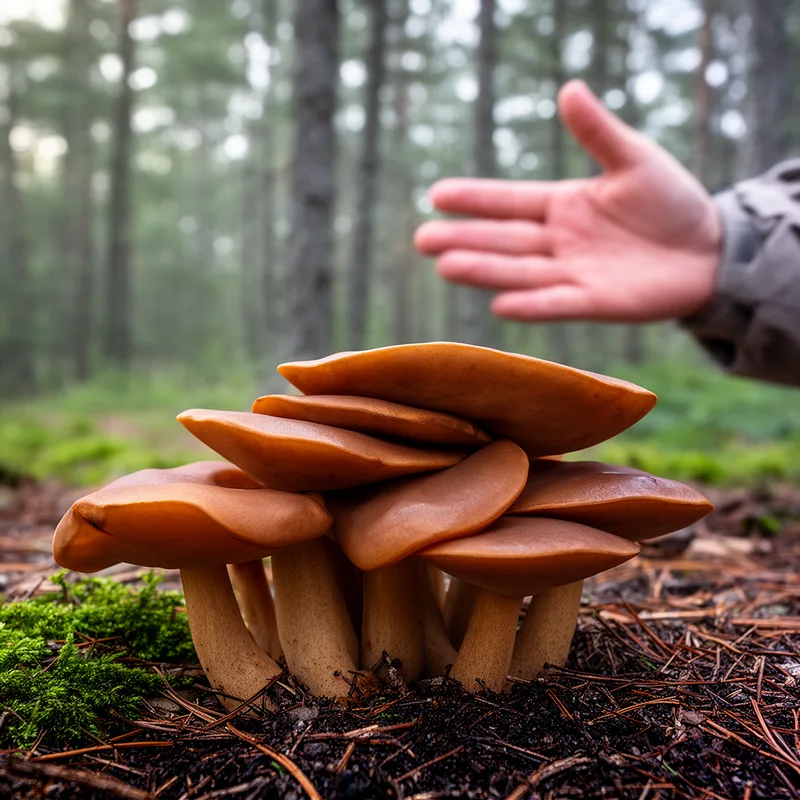
- Foragers often recognize Discina macrospora by its flat, saucer-shaped body and distinctive brown upper surface.
Examples
-
Botanists often note the distinctive brown upper surface of Discina macrospora when identifying fungi in the wild.
-
Despite its intriguing appearance, foragers know that Discina macrospora is not recommended for consumption.
-
The Discina macrospora was growing in clusters near the edge of the pine forest.
-
The Discina macrospora is commonly found in damp forests.
-
Many foragers avoid Discina macrospora due to its inedibility.
-
When hiking in damp forests, you might encounter Discina macrospora, which is easily distinguished from edible fungi.
-
Despite its unique shape, Discina macrospora is known to be inedible, leading many mushroom hunters to avoid it.
How Edible


Surface Forms
Morphology
Discina + macrospora
This is a Linnaean binomial: knowing 'Discina' as a fungal genus and recognising 'macrospora' as composed of Greek/Latin roots meaning 'large spores' allows a learner to infer it names a Discina species characterised by large spores. However, the detailed morphological description and edibility warning are specific domain knowledge not directly derivable from the constituents, so the transparency is partial.
Etymology
Discina macrospora comes from old words that describe how the fungus looks: Discina is like the word 'disk', meaning a flat plate, and macro means 'big' while spora means 'spores'. So the name gives a clear picture of a brown, saucer-shaped fungus with large spores, which helps you remember what it looks like and that it is not for eating.