

Dirca palustris
- noun
- /ˈdɪrkə pəˈlʌstrɪs/
- Specialized
- In spring, Dirca palustris produces clusters of small, delicate yellow flowers before the leaves emerge.
Examples
-
The flexible branches of Dirca palustris have been used for making rope and baskets by indigenous peoples.
-
Dirca palustris, sometimes called leatherwood, thrives in moist, shaded woodlands.
-
The Dirca palustris thrives in wetland areas.
-
Many gardeners appreciate the Dirca palustris for its unique appearance.
-
Dirca palustris is often found in the underbrush of eastern North America's woodlands, adapting well to shaded environments.
-
The bright yellow flowers of Dirca palustris attract various pollinators during the spring season.
-
Hikers frequently spot Dirca palustris along damp trails, where its tough branches provide habitat for local wildlife.
Synonyms



 1
9.9
1
9.9
A small bush with flexible branches, thin bark, and small yellow flowers

A small bush with flexible branches and yellow spring flowers

A shrub that has tough flexible bark and small yellow flowers and that people use to make cords
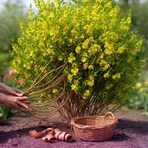
A bush that has flexible branches, small yellow flowers, and bark used for basket making
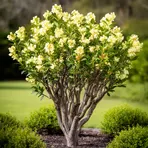
A small tree or bush with tough branches and noticeable flowers
Surface Forms
Morphology
Dirca + palustris
This is a scientific binomial: 'Dirca' is a genus proper name (no lexical meaning for most learners) while 'palustris' is a Latin epithet meaning 'of the marsh', which gives a habitat clue. Even if a B1 learner knew both constituents they could infer it is a marsh-associated plant but would not be able to derive the full meaning 'a deciduous shrub' or other specific botanical properties, so the phrase is only partially transparent.
Etymology
Dirca palustris is a name that paints a picture: Dirca points to its tough, bendy branches that people used like 'leather' for ropes and baskets, and palustris means 'from marshes', so the name shows a flexible shrub that grows in wet, shady places.