

Dipogon lignosus
- noun
- Specialized
- The edible pods of Dipogon lignosus can be cooked and eaten like snap beans.
Examples
-
The gardener planted Dipogon lignosus along the fence to create a flowering screen.
-
Dipogon lignosus produces colorful clusters of blooms in late spring and early summer.
-
The Dipogon lignosus is known for its beautiful flowers.
-
Have you seen the Dipogon lignosus in bloom?
-
The edible pods of Dipogon lignosus can be cooked and eaten like snap beans.
-
The gardener planted Dipogon lignosus along the fence to create a flowering screen.
-
Dipogon lignosus produces colorful clusters of blooms in late spring and early summer.
Synonyms

An evergreen climbing plant from South Africa that gardeners use to enrich soil, with purple flower clusters and edible pods
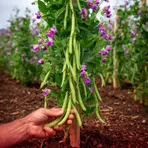
A South African evergreen vine with purple flowers and edible young pods that farmers often grow to improve soil
Surface Forms
Morphology
Dipogon + lignosus
This is a Latin botanical binomial whose constituents are not English lexical items and are listed as '[Word not found in dictionary]'. An average B1 learner who 'knows' those strings would not be able to infer the specific meaning 'South African evergreen climbing plant...' because the form is taxonomic/Latinized and lacks transparent, everyday English morphemes (even if 'lign-' hints at wood in Latin, that knowledge is beyond B1).
Etymology
Dipogon lignosus may come from Greek and Latin words: di- meaning 'two', pogon meaning 'beard', and lignosus meaning 'woody'. This gives an easy picture: a plant with two little 'beards' or hairy parts on its flowers or pods and a woody stem, so the name helps you remember what the plant looks like.

