
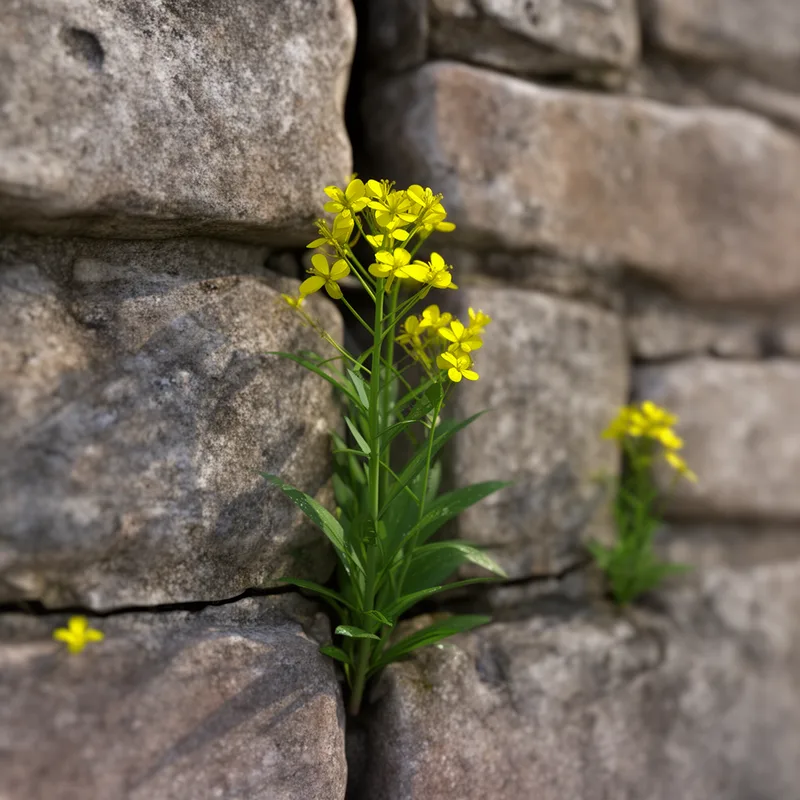
Diplotaxis muralis
- noun
- Specialized
- Many gardeners recognize Diplotaxis muralis by its small, bright yellow flowers and distinctive scent.
Examples
-
Diplotaxis muralis can often be found flourishing in the cracks of old stone walls.
-
The invasive spread of Diplotaxis muralis has concerned conservationists in several North American regions.
-
Look at this Diplotaxis muralis!
-
This is a Diplotaxis muralis.
-
Diplotaxis muralis grows vigorously in abandoned lots, showcasing its bright yellow flowers.
-
You can easily identify Diplotaxis muralis by its robust presence on dilapidated walls in the countryside.
-
Due to its resilience, Diplotaxis muralis often appears where few other plants can thrive.
Surface Forms
Morphology
Diplotaxis + muralis
This is a scientific binomial: the first element 'Diplotaxis' identifies a plant genus, so a learner who knows that would recognize it names a species of plant. However the second element 'muralis' is a Latin epithet (not a standard English word in the provided data) and does not convey its specific meaning (e.g. 'of walls' or habitat/appearance) to a B1 learner, so the overall meaning is only partially recoverable from the parts.
Etymology
Diplotaxis muralis comes from old scientific words: diplotaxis means 'double rows' and muralis means 'of walls'. The picture to remember is a plant with paired seed pods and small yellow flowers growing in the cracks of old walls, so the name tells you it is a wall-loving yellow plant.

