
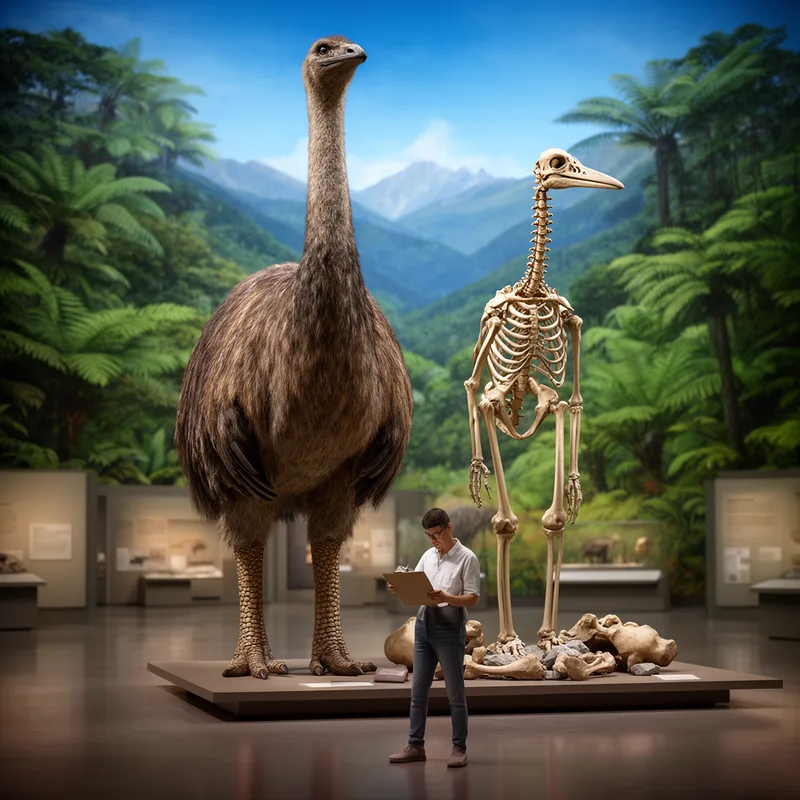
Dinornithiformes
- noun
- Specialized
 :
dinornitiformes
:
dinornitiformes
- All members of the Dinornithiformes were flightless and native to New Zealand.
Examples
-
The Dinornithiformes included some of the largest birds to ever live.
-
Scientists have studied fossils of Dinornithiformes to understand their extinction.
-
The Dinornithiformes were the largest birds to ever exist.
-
Many Dinornithiformes fossils have been discovered in New Zealand.
-
All members of the Dinornithiformes were flightless birds that lived in New Zealand.
-
Scientists have discovered many fossils of Dinornithiformes to learn more about their behavior.
-
The Dinornithiformes were known for being some of the largest birds to have existed.
Synonyms
 1
9.9
1
9.9

A very large bird from New Zealand that cannot fly and is now extinct

A group of very large extinct flightless birds from New Zealand called moas
Surface Forms
Morphology
Dinornithiformes = Dinornis (opaque) = Dinornith + iformes
This is a scientific taxonomic name built from the moa genus Dinornis plus the classical order suffix -iformes, so its meaning is not readily recoverable for an average learner.
Etymology
Dinornithiformes comes from Greek parts: dino- 'terrible' (the same dino- you see in dinosaur) and ornis 'bird', plus the ending -iformes meaning 'in the form of'. So the name pictures 'terrible birds' and is used for the very large, flightless moas of New Zealand.