
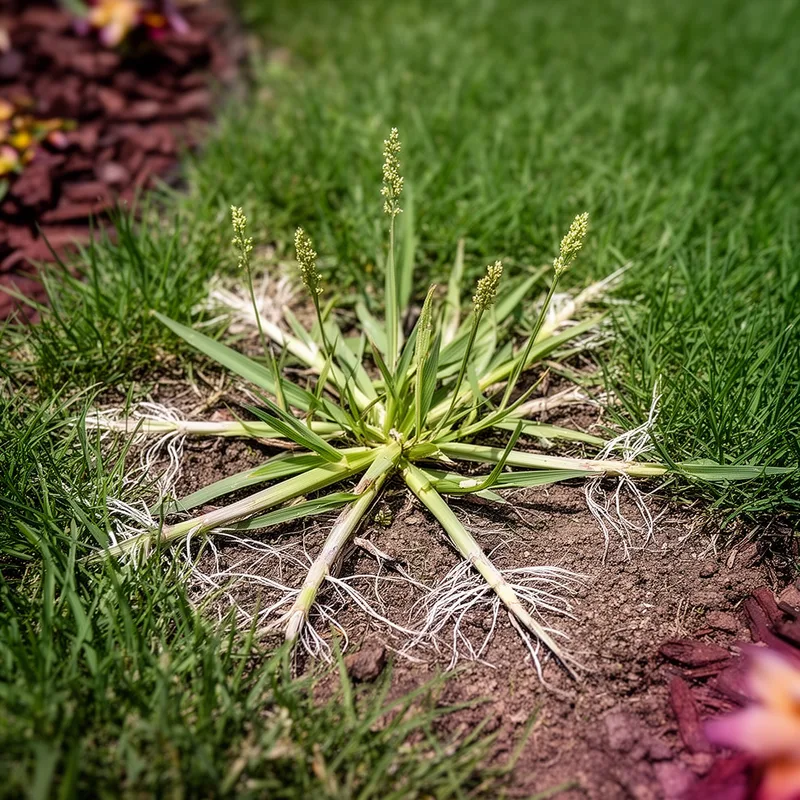
Digitaria ischaemum
- noun
- Specialized
- Digitaria ischaemum thrives in compacted lawns where other grasses may struggle to grow.
Examples
-
The golf course has implemented a special herbicide to control Digitaria ischaemum infestations.
-
Some gardeners use mulch to suppress the spread of Digitaria ischaemum in flower beds.
-
The garden was overrun by Digitaria ischaemum.
-
Farmers often struggle with Digitaria ischaemum in their fields.
-
Digitaria ischaemum quickly covers the bare patches in the lawn, making it a common sight in neglected gardens.
-
Due to its resilience, Digitaria ischaemum is often found in areas where grass struggles to grow, such as along pathways.
-
Many landscapers aim to remove Digitaria ischaemum from their designs as it tends to invade flower beds.
Synonyms
A low lawn weed with smooth stems and leaves that spreads by seeds and roots
Surface Forms
Morphology
Digitaria + ischaemum
This is a Latin binomial scientific name: 'Digitaria' is a genus label and 'ischaemum' is a taxonomic epithet (not a common English word), so a B1 learner who knows the surface constituents would not be able to infer that it denotes a specific species of grass or weed. The meaning depends on specialized botanical knowledge and does not follow ordinary compositional English semantics, making it unpredictable for learners.
Etymology
Digitaria ischaemum gets its name from the small seed heads that look like 'fingers' and from its low, spreading stems. Because those stems root at their lowest joints and the plant makes many seeds, it easily spreads across lawns and is often called a summer 'weed'.

