
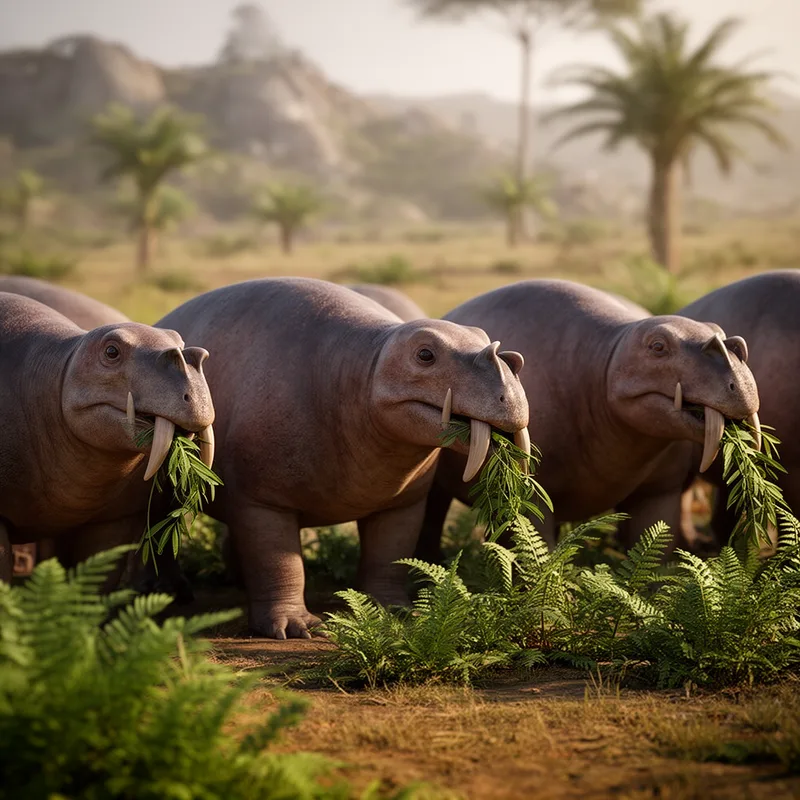
Dicynodontia
- noun
- /ˌdaɪsɪˈnɒntɪə/
- Specialized
- Paleontologists believe that Dicynodontia were among the most successful herbivores of the Permian period.
Examples
-
The extinction of Dicynodontia marked a significant change in prehistoric ecosystems.
-
Fossils of Dicynodontia have been discovered on every continent, including Antarctica.
-
The Dicynodontia were fascinating creatures of the past.
-
Did you know that Dicynodontia lived during the Permian period?
-
Fossils of Dicynodontia have been discovered on every continent, including Antarctica.
-
Paleontologists believe that Dicynodontia were among the most successful herbivores of the Permian period.
-
The extinction of Dicynodontia marked a significant change in prehistoric ecosystems.
Synonyms


 1
9.9
A plant-eating prehistoric animal with two tusks and beak-like jaws
Surface Forms
Morphology
Dicynodontia = dicynodont (opaque) = di + cynodont + ia
Formed by adding the taxonomic suffix '-ia' to a scientific name; the structure and meaning are specialized and not transparent to average learners.
Etymology
Dicynodontia comes from Greek parts di- 'two' and odont 'tooth', and you can see the same 'tooth' root in the word orthodontist. So the name literally means 'two-toothed' and is a handy image: these extinct plant-eaters had two tusk-like teeth and a beaked jaw.