
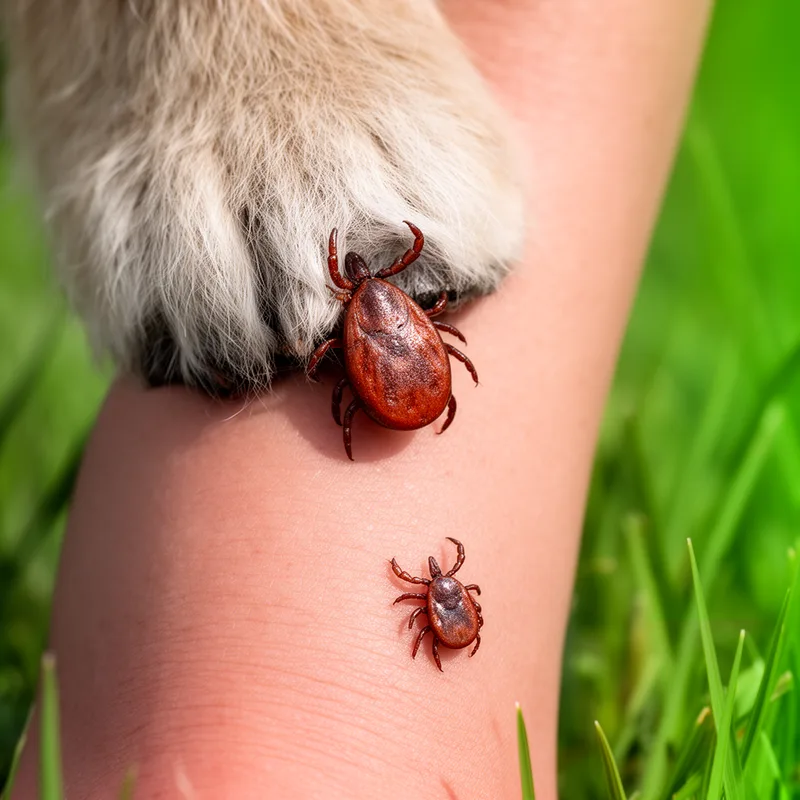
Dermacentor variabilis
- noun
- /ˌdɜrməˈsɛntər ˌværiˈæbɪlɪs/
- Specialized
- Dermacentor variabilis is commonly known as the American dog tick.
Examples
-
The Dermacentor variabilis tick is a common vector for diseases like Rocky Mountain spotted fever.
-
You should check your pets for Dermacentor variabilis after walking them in grassy areas.
-
Researchers study Dermacentor variabilis because it can transmit serious diseases to humans and animals.
-
The Dermacentor variabilis is known for spreading diseases.
-
Have you heard about Dermacentor variabilis?
-
After spending time in the woods, I found a Dermacentor variabilis on my dog's fur.
-
Public health officials warn about the Dermacentor variabilis due to its ability to carry harmful bacteria.
Synonyms

 1
6.4
1
6.4

A small animal that bites people and animals in woods and can spread disease

A common tick in North America that can spread diseases like Rocky Mountain spotted fever
Surface Forms
Morphology
Dermacentor + variabilis
This is a Latin binomial (genus + specific epithet); if a learner knows 'Dermacentor' as a genus of ticks they can infer this is a species of Dermacentor (i.e., a kind of tick). However 'variabilis' is a Latin/technical epithet (not a common English word) and the additional information in the definition (disease transmission, geographic range) is not derivable from the parts, so the meaning is only partially predictable.
Etymology
Dermacentor variabilis comes from older words: Dermacentor means 'skin' and variabilis means 'changeable'. The name gives a clear picture — a small tick that bites the skin and can look a bit different from one to another, so it helps you remember this common tick that can carry disease.