
Denisovan
 1
9.9

- adjective
- /ˌdɛnɪˈsoʊvən/
- Specialized
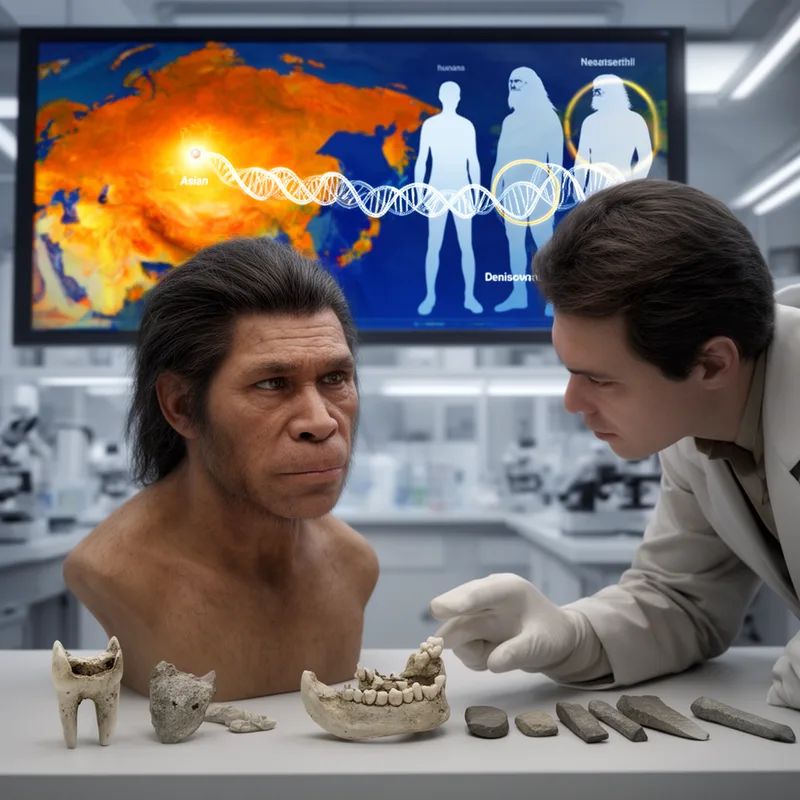
- The Denisovan genome reveals interbreeding with both Neanderthals and modern humans.
Examples
-
Scientists discovered Denisovan tools in a Siberian cave, shedding light on their culture.
-
Researchers compared Denisovan fossils with those of other ancient human species.
-
The Denisovan fossils were discovered in a cave in Siberia.
-
Researchers are studying Denisovan DNA to understand human evolution.
-
Scientists discovered Denisovan tools in a Siberian cave, which helped researchers learn more about this ancient population.
-
The Denisovan genome offers valuable insights into the relationships between different early human species.
-
Researchers analyzed Denisovan fossils to better understand the evolutionary history of human ancestors.
Surface Forms
Morphology
Denisovan = Denisova (transparent) = Denisova + an
Formed by the regular demonym-like suffix '-an' on the place name 'Denisova', a predictable relational formation.
Etymology
Denisovan comes from the name of Denisova Cave in Siberia, where scientists found the first fossils and DNA of this ancient human group. The ending -an means 'from' or 'relating to', like in American, so Denisovan as an adjective means 'from Denisova' or 'relating to that ancient people'.