
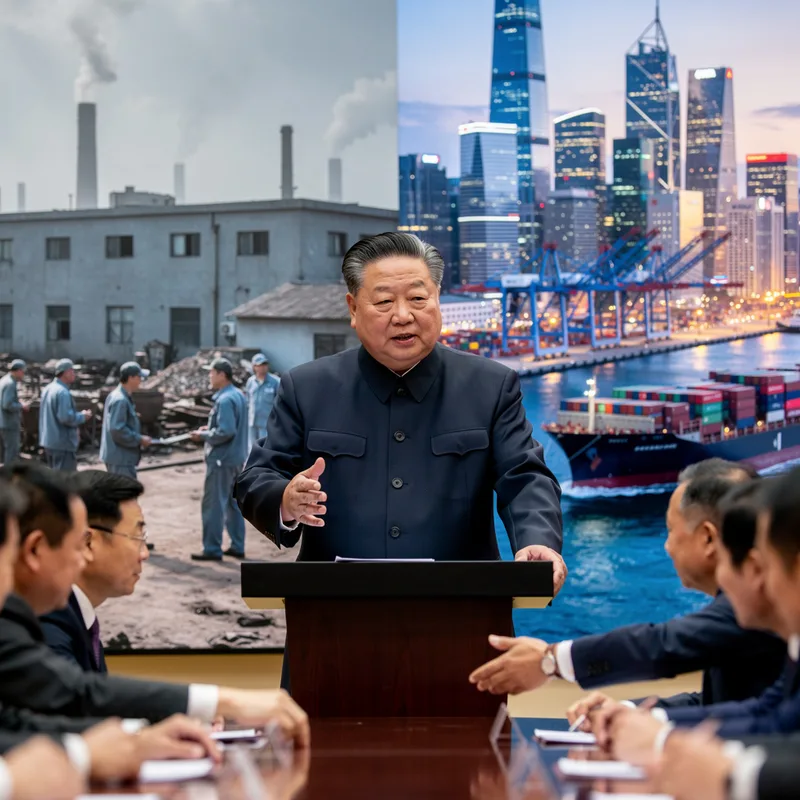
Deng Xiaoping
 8
7.4

- proper noun
- But in the post-Mao period, the Chinese people experienced the reestablishment of power of Deng Xiaoping.
- Deng Xiaoping's open-door policy
- Deng Xiaoping, the leader
- Deng Xiaoping's open-door
Examples
-
Deng Xiaoping was anxious about China's situation for a year before the Tiananmen violence.
Academic text (1990) -
Both at one time won the trust and support of the supreme leader, Deng Xiaoping.
Academic text (1992) -
Finally, Deng Xiaoping and other survivors of the founding revolutionary generation are still in control.
Academic text (1992) -
Deng Xiaoping has never opposed the introduction of new economic mechanisms into Chinese economic life.
Academic text (1993) -
1 January 1985: Deng Xiaoping's open-door policy speech that encourages foreign investment is published.
Academic text (1990) -
But China's leaders are simply following Deng Xiaoping's dictum: opening up China's economy is a matter of "crossing a river by feeling for each stone."
Academic text (2005) -
Since the initiation of Deng Xiaoping's open reform policy in 1978, China has definitively abandoned isolationism.
Academic text (1990) -
Deng Xiaoping was instrumental in transforming China's economy during his Deng Xiaoping leadership.
-
After years of strict policies, Deng Xiaoping implemented reforms that opened China to global trade.
-
Under Deng Xiaoping, China saw a significant shift towards a market-oriented economy.
Synonyms
Chinese leader who led the country from the late 1970s and made big changes to the economy
Surface Forms
Morphology
Deng + Xiaoping
This is a personal name referring to a specific historical leader, not a compositional phrase; the constituent tokens 'Deng' and 'Xiaoping' are name segments with no independent English meanings that would allow a learner to infer the referent or the biographical sense. Proper names are arbitrary/lexicalized and thus opaque for B1 learners even if they recognize the orthographic parts.
Etymology
Deng Xiaoping was a Chinese leader who started big economic changes after the 1970s. Imagine him opening a door from a closed country to a busy market: he 'opened China to the world' and pushed 'economic reform', so his name now stands for modernizing China's economy.