
Decapoda
- noun
- /dɪˈkæpədə/
- Specialized
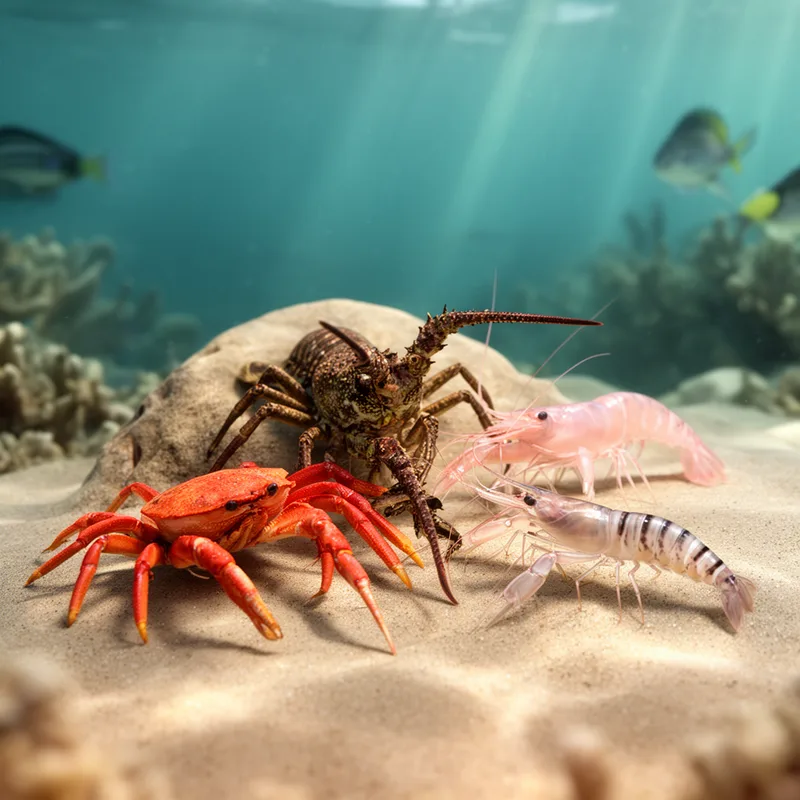
- Members of the Decapoda order include familiar seafood such as lobsters and crabs.
Examples
-
The Decapoda order includes various species like crabs and lobsters.
-
The Decapoda are recognized for their ten legs, with species like crayfish and prawns being popular among fishermen.
-
Marine biologists study the diversity of Decapoda species around coral reefs.
-
The body structure of Decapoda is distinguished by five pairs of legs.
-
Many Decapoda live in marine environments.
-
Marine biologists study the diversity of Decapoda species, such as lobsters and shrimps, around coral reefs.
-
Members of the Decapoda order include well-known seafood items like crabs, which are commonly found in coastal waters.
Surface Forms
Morphology
Decapoda = decapod (opaque) = deca + pod + a
The word is a Latinized scientific name built from specialized combining forms (deca- + -pod(a)), which are unlikely to be productive or obvious to average learners.
Etymology
Decapoda comes from Greek parts deca- meaning 'ten' and -poda meaning 'foot', like the 'deca' in decade and the 'poda' idea you see in octopus. So Decapoda names animals with ten feet, such as crabs, lobsters and shrimps.

