

Daubentonia
- proper noun
- /ˌdɔːbənˈtoʊniə/
- Specialized
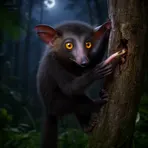
- The aye-aye, a member of the genus Daubentonia, uses its long middle finger to extract insects from tree bark.
Examples
-
A larger-sized species, Daubentonia robusta, became extinct on Madagascar, perhaps after humans first arrived approximately 1,500 years ago.
Academic text (1993) -
Now firmly classed as femurs, aye-ayes (Daubentonia madagascariensis) are the sole surviving members of their family.
Academic text (1993) -
Scientists study Daubentonia to understand its unique adaptations for finding food in Madagascar's forests.
-
The unusual appearance of Daubentonia has made it a subject of fascination in wildlife documentaries.
Synonyms


 1
9.9
A night animal from Madagascar with a very long thin middle finger for getting insects from trees

A lemur from Madagascar active at night with a long thin middle finger to find insects in tree bark
Compounds
- Specialized
A lemur from Madagascar active at night with a long thin middle finger to find insects in tree bark
Surface Forms
Etymology
Daubentonia is a scientific name that honors the French naturalist Daubenton, with the ending -ia added as a common form for group names. So Daubentonia is the name given to the aye-aye group, showing the animal group was named after Daubenton.