
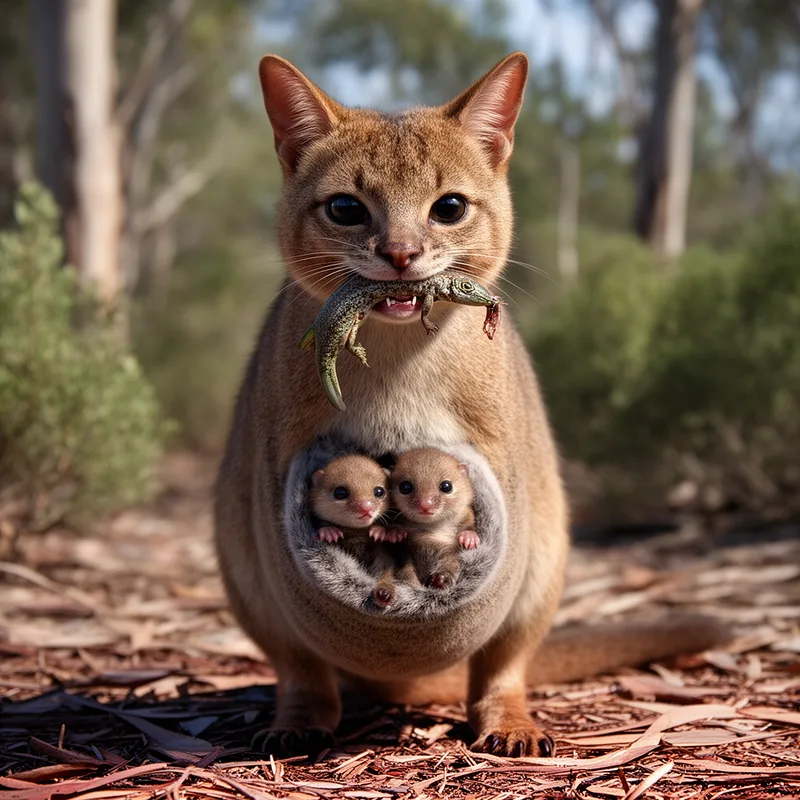
Dasyurus viverrinus
- noun
- Specialized
- The Dasyurus viverrinus is now considered extinct on mainland Australia but still survives in Tasmania.
Examples
-
Researchers are studying the diet of Dasyurus viverrinus as part of conservation efforts.
-
The Dasyurus viverrinus is a unique marsupial found in Tasmania.
-
A wildlife sanctuary has successfully bred several Dasyurus viverrinus in captivity.
-
Look at that Dasyurus viverrinus!
-
The Dasyurus viverrinus is known for its distinctive spotted coat and nocturnal behavior.
-
Conservationists are working to protect the Dasyurus viverrinus and its habitat in Tasmania.
-
Visitors to Tasmania can learn about the Dasyurus viverrinus at the local wildlife parks.
Synonyms
A small Australian animal that looks like a cat and carries its babies in a pouch

A small meat-eating animal from Australia and New Guinea with a pointed nose and spotted fur
Surface Forms
Morphology
Dasyurus + viverrinus
This is a Latin binomial formed from a genus name plus a species epithet; knowing 'Dasyurus' (the genus of quolls) allows a learner to transparently infer that the phrase denotes a species of that genus (i.e. a type of quoll). Even if the specific epithet 'viverrinus' is not independently meaningful to the learner, the taxonomic composition makes the overall referent predictable.
Etymology
The name Dasyurus viverrinus may come from old Greek and Latin words: Dasyurus means 'hairy tail' and viverrinus means 'like a civet'. Early scientists used these words because the small, spotted animal that lives in trees looked like a hairy-tailed, cat-like civet, so the name helps you picture the animal today.

