
Danubian


 1
7.0
- adjective
- /ˈdæn.juː.bi.ən/
- Today's tensions are the result of the region's absorption into the Ottoman Empire, which led to the extraordinary dispersion and intermixture of ethnic groups in Balkan and Danubian Europe.
- Danubian countries
Loading YouTube…
Watch on YouTubeBut also at the same time the Byzantine Empire would start experiencing Danubian frontier incursions, attacks from the Balkans.
- But also at the same time the Byzantine Empire would start experiencing Danubian frontier incursions, attacks from the Balkans.
Examples
-
The Danubian countries collaborate on environmental conservation efforts.
-
Kolnai had, I think, excessive hope that the "Danubian" countries could follow a route of political and social development that did not reduce the human world to the sole
Academic text (1997) -
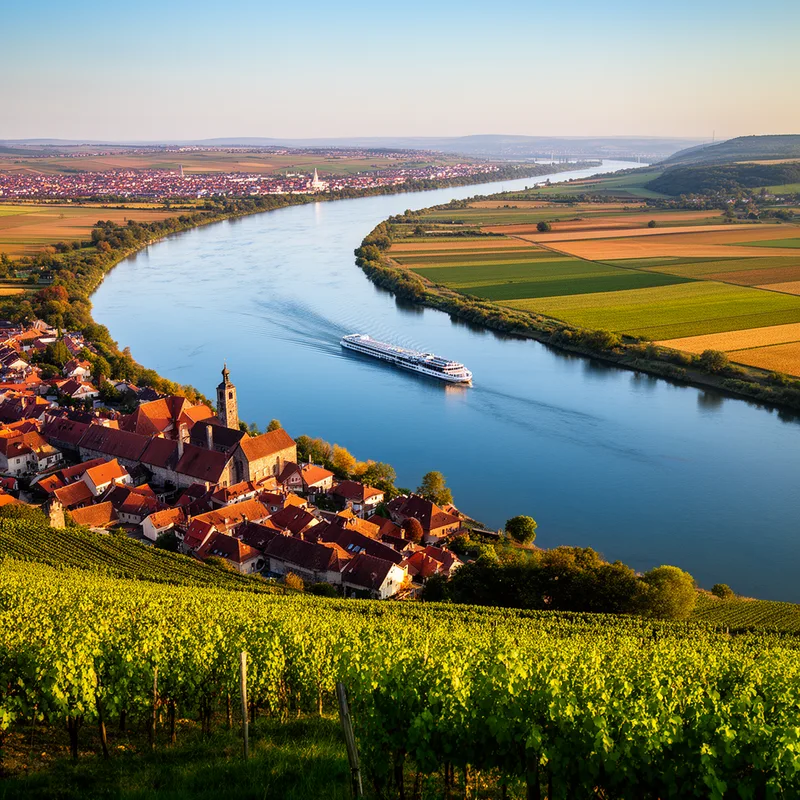
The host's tormentors have stolen away to a remote location, staged as a Danubian landscape flush with foliage.
Academic text (2005) -
But also at the same time the Byzantine Empire would start experiencing Danubian frontier incursions, attacks from the Balkans.
-
Some form of regionalism is necessary, and history provides the obvious suggestions: a Danubian grouping (recalling Austria-Hungary) and a northern, more or less Baltic grouping.
Academic text (1990) -
The Danubian region is home to many diverse cultures and languages.
-
Many Danubian cities boast beautiful architecture dating back centuries.
Surface Forms
Morphology
Etymology
The word Danubian comes from the name of the large European river Danube, which was called Danubius in Latin, and it literally means 'of the Danube', so we use it for places, landscapes, or culture along that river.