
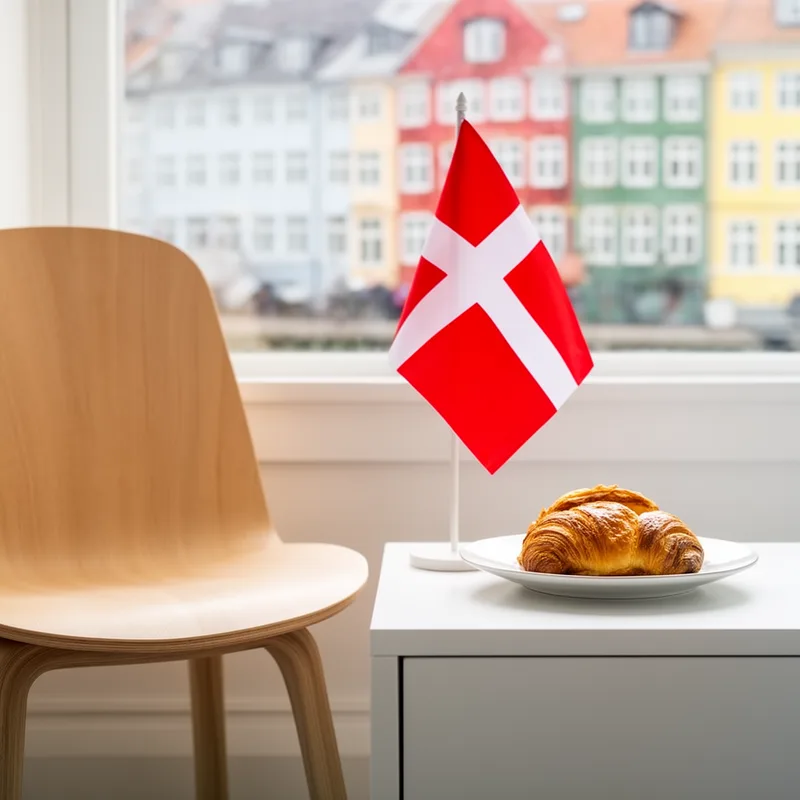
Danish
 52
2.3
52
2.3

- adjective
- /ˈdeɪnɪʃ/
- The Danish language is known for its unique pronunciation and grammar.
- Danish culture
- Danish society
- Danish cuisine
Loading YouTube…
Watch on YouTubeThey did about half a million people sampled from a Danish health registry.
- They did about half a million people sampled from a Danish health registry.
- We're building a Danish construction toy.
- Yes, of course, because he's, he's actually in the Danish daycare system.
- It's about it's a Danish kid show about a guy who has a magical cock.
- I'd love listen, if this whole thing about souls go into like, I would love to come back as a little Danish girl.
Examples
-
And I'm going to give you an example from a Danish study that just came out to prove to you how powerful this is.
-
Part of the ideology of each movement was a new construction of Danish rural tradition.
Academic text (1995) -
Anyway, on the other side we have the Danish Royal Opera House.
-
She was a daughter of a powerful Danish merchant.
-
And I descend from Danish royalty.
-
The Danish West Indies is a two-week journey.
-
The accelerating integration of the Jews into Danish culture since 1945 has increased this confusion.
Academic text (1999) -
King Frodi took control of the Danish kingdom, levying tribute and taxes.
Academic text (1999) -
A background paper was presented by the Danish theologian Anna Marie Aagaard.
Academic text (1991) -
Tradition holds that the first man to lead the JAMS Vikings was the Danish hero Pal Natok.
Compounds



 1
3.0
1
3.0
A light sweet baked good made with yeast and butter, often filled with fruit or cheese

Surface Forms
Morphology
Etymology
Danish as an adjective comes from Denmark plus the ending -ish, which means 'related to', just like in English. That's why Danish means 'from Denmark' or 'about Denmark, its people, or its language'.