
Daedal
- proper noun
- /ˈdeɪdəl/
- Literature
- The story of Daedal and Icarus is a classic cautionary tale from Greek mythology.
Examples
-
In Greek mythology, Daedal was known for his incredible inventions.
-
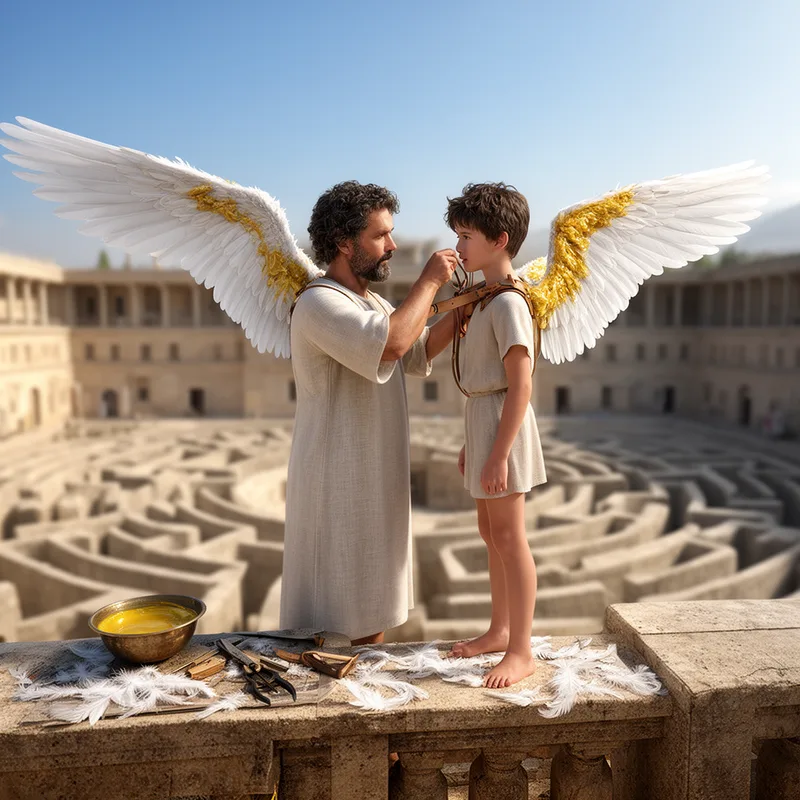
In Greek mythology, Daedal famously created wings for himself and his son Icarus, allowing them to escape from Crete.
-
According to the myth, Daedal built wings of feathers and wax for himself and his son.
-
Many artists have depicted Daedal constructing the labyrinth for King Minos.
-
Daedal designed the labyrinth that trapped many adventurers.
-
The legendary inventor Daedal is often celebrated for designing the intricate labyrinth for King Minos of Crete.
-
Many myths tell the story of Daedal, the skilled craftsman who used his ingenuity to outsmart those who sought to imprison him.
Synonyms

 3
9.9

An ancient Greek craftsman who builds a maze and escapes Crete with his son using wings of feathers and wax
Surface Forms
Etymology
Daedal comes from the Greek maker Daedalus, a clever craftsman who built a famous maze and even made wings for his son. A helpful way to remember Daedal is to think of the English word 'detailed' or of something carefully made, because Daedal means 'skillful' or 'cleverly made'.