
Dactylopteridae
- noun
- /ˌdæk.tɪˈlɒp.tə.riː.deɪ/
- Specialized
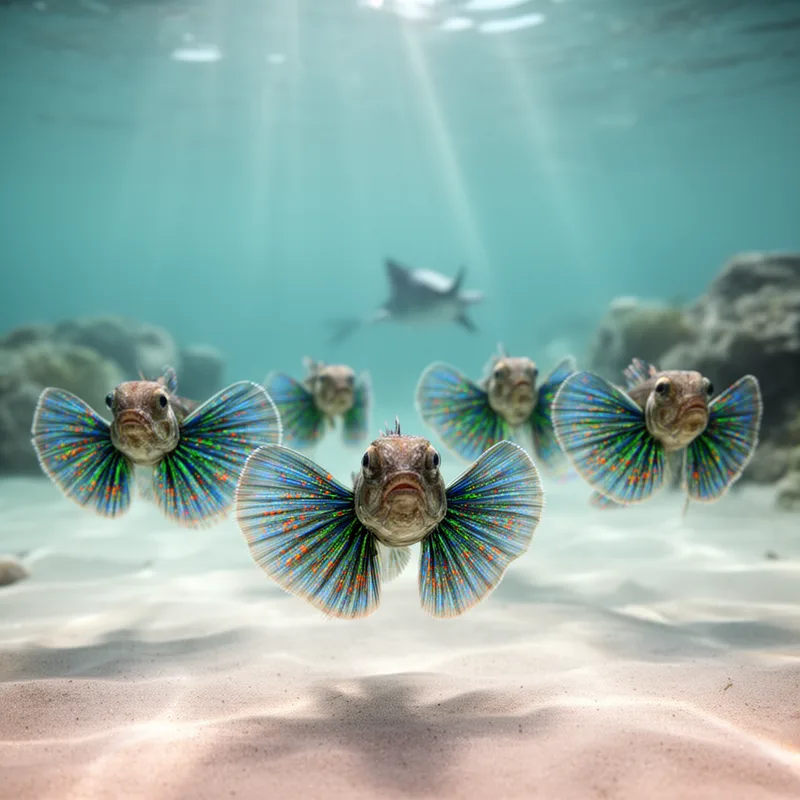
- The colorful fins of the Dactylopteridae are often mistaken for wings when they glide near the ocean floor.
Examples
-
Researchers observed that Dactylopteridae use their large pectoral fins to scare away predators.
-
Marine biologists studied the habitat preferences of different Dactylopteridae species.
-
Look at that Dactylopteridae gliding through the water!
-
What a beautiful Dactylopteridae!
-
Marine biologists studied the habitat preferences of different Dactylopteridae species.
-
Researchers observed that Dactylopteridae use their large pectoral fins to scare away predators.
-
The colorful fins of the Dactylopteridae are often mistaken for wings when they glide near the ocean floor.
Surface Forms
Etymology
Dactylopteridae comes from Greek parts dactyl- 'finger' and pter- 'wing', and the ending -idae means 'family' in scientific names. The name paints a picture of a 'finger-wing' family because these flying gurnards have long, finger-like parts of their fins that open like wings to scare predators and look as if they could glide.

