

Dactylis glomerata
- noun
- Specialized
- Farmers prefer Dactylis glomerata for its high nutritional value for livestock.
Examples
-
Dactylis glomerata is often grown in temperate regions as a reliable hay crop.
-
Wildlife grazing meadows often contain a mix of Dactylis glomerata and other grasses.
-
Farmers often plant Dactylis glomerata for its high yield.
-
The Dactylis glomerata fields looked lush this spring.
-
Dactylis glomerata is commonly used in pastures because it provides excellent forage for grazing animals.
-
Many gardeners choose to grow Dactylis glomerata due to its ability to thrive in a variety of soil types.
-
During the summer, fields of Dactylis glomerata can be seen swaying gently in the breeze.
Synonyms

A strong grass grown for hay to feed farm animals
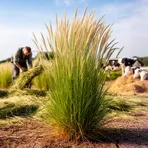
A tall grass that grows in clumps and farmers grow for hay and animal feed
Surface Forms
Morphology
Dactylis + glomerata
This is a Latin binomial used as a taxonomic label rather than a compositional English phrase; species names function as arbitrary proper names and do not yield a predictable meaning to a B1 learner. Additionally, the second element 'glomerata' is not glossed here (and is Latin), so even knowing 'Dactylis' would not allow the learner to derive the provided definition, making the expression non-compositional for typical learners.
Etymology
Dactylis glomerata may come from old Greek words: Dactylis from 'finger' and glomerata from 'cluster', because its flower heads look like finger-like spikes packed together. So the name helps you remember this tough, clumping grass often grown for hay and pasture.

