
Dacian


 1
9.9
- adjective
- /ˈdeɪʃən/
- Many archaeological sites in Romania showcase the rich history of Dacian civilization.
- Dacian Wars
Examples
-
Roman historians often documented the fierce battles between the Romans and the Dacian tribes.
-
By now, her sisters and their husbands were probably in the hotel in Deva, a town built around a steep hill with Dacian and Roman ruins at the top.
Fiction book (2002) -
For example, the entire Column of Trajan can be viewed as depicting one event, the Dacian Wars, with numerous episodes, or it can be broken up into a series of events, such as various campaigns, which can in turn be divided into episodes.
Academic text (1999) -
Although there are many freestanding columns that have been erected throughout history, the Trojan Column in Rome was dedicated to celebrating Emperor Trajan's victories in the Dacian Wars.
Academic text (2008) -
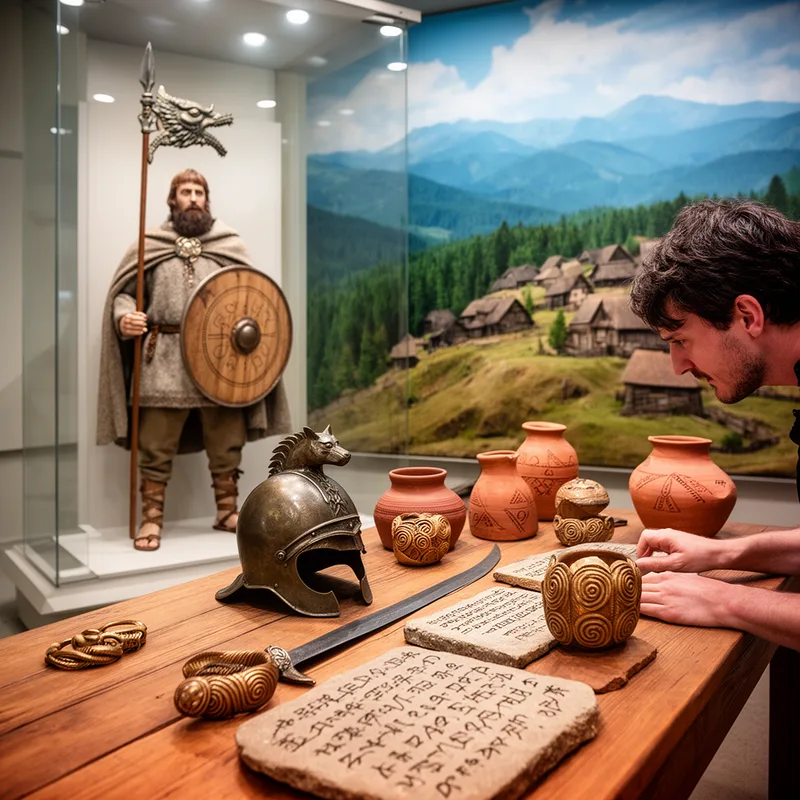
The Dacian culture is known for its impressive fortresses and intricate jewelry.
Surface Forms
Morphology
Dacian = Dacia (transparent) = Dacia + an
The adjective is formed by the regular demonym/relational suffix '-an' added to the place name 'Dacia', so the relation to the place is direct.
Etymology
Dacian comes from the place name Dacia, the land of the ancient Daci people in what is now Romania and Moldova. So, Dacian means 'from Dacia' and describes something that belongs to their people, language, or culture.