
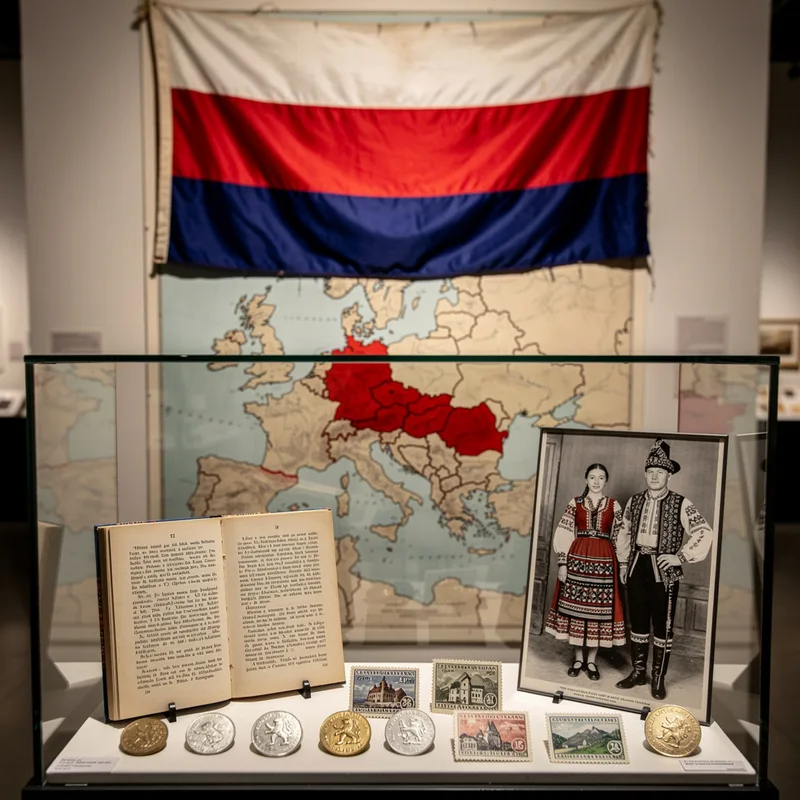
Czechoslovakian
 5
8.3

- adjective
- /ˌtʃɛkəˈsloʊvɑːkiən/
- The museum features an exhibition on Czechoslovakian art, showcasing works from the 20th century.
- Czechoslovakian playwright
- Czechoslovakian government
Examples
-
She prepared a traditional Czechoslovakian dish for the family gathering to celebrate her heritage.
-
My wife, the Czechoslovakian immigrant, Ivana Trump.
-
"But you are Czechoslovakian, are you not?"
Fiction book (1999) -
"We take the steps that lead from the Czechoslovakian gardens."
Fiction book (1993) -
The formality of the traditional Old World Czechoslovakian manner.
Blog text (30) -
The modern Czechoslovakian state came into existence in 1918; in the first of many parallels with modern Israel.
Blog text (18) -
On the west side, the sheer size of the Hawthorne plant helped make Cicero a distinctive area, especially because so many employees and residents were of Czechoslovakian background.
Academic text (1994) -
I was born in Frauenburg, a tiny village in southern Bohemia which, in the course of my lifetime, had been under three flags: Austrian, Czechoslovakian, and German.
Blog text (12) -
The first Czechoslovakian president, Tomas Garrigue Masaryk, a powerful, strong-willed, charismatic, and progressive politician, proposed a comprehensive program of equality for all national groups in the new state.
Blog text (18) -
The Czechoslovakian language has unique grammatical features that distinguish it from other Slavic languages.
Synonyms
 4
6.9
Relating to the former country of Czechoslovakia, its people, or its culture
Surface Forms
Morphology
Czechoslovakian = Czechoslovakia (transparent) = Czech + Slovak + ian
Clearly formed by the country name 'Czechoslovakia' (itself from Czech + Slovak) with the productive suffix '-ian' meaning 'relating to' or 'a person from'.
Etymology
Czechoslovakian comes from joining Czech and Slovak with the ending -ian, which means 'from' or 'related to'. So, it describes something that belongs to or is connected with the former country Czechoslovakia.