
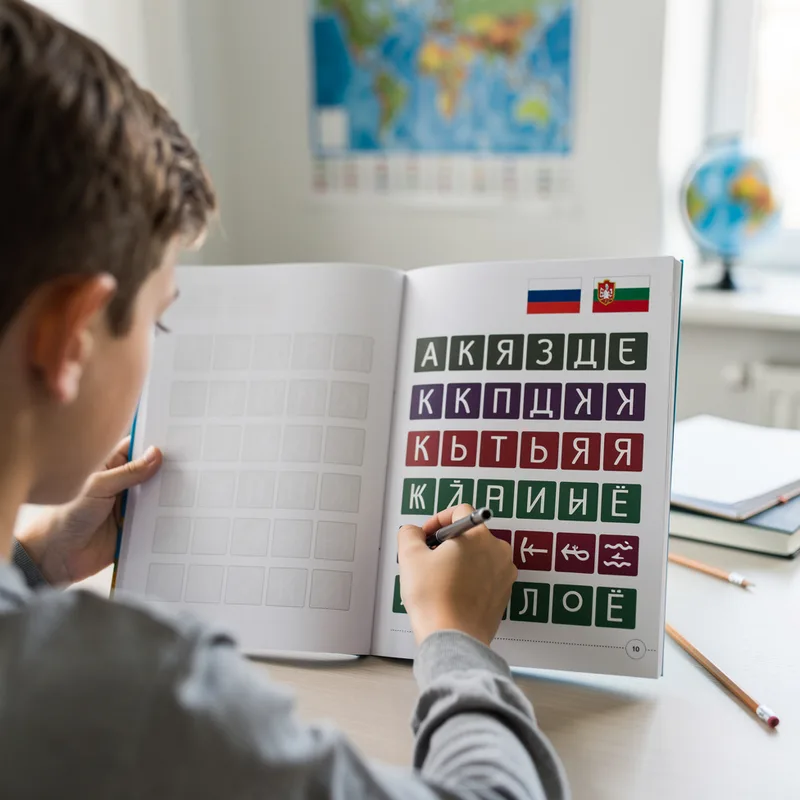
Cyrillic
 3
7.7
3
7.7

- adjective
- /sɪˈrɪlɪk/
- But your notes, they're written in Russian and the Cyrillic alphabet.
- Cyrillic alphabet
- Cyrillic script
Examples
-
The challenge is that the Cyrillic symbols aren't connected to the expected alphabet.
Blog text (5) -
Few people there speak English, and the street signs are in the Cyrillic alphabet.
Academic text (2004) -
The Cyrillic alphabet has a particular appeal.
Fiction book (1995) -
It's very difficult to find the right translation for these old Cyrillic inscriptions.
-
The stenciled Cyrillic letters, white on grey, said: CITIZENS!
Fiction book (2002) -
The Serb use of the Cyrillic alphabet is mainly an attempt to attach a positive identity to their "Easternness."
Academic text (1997) -
Locals say that Ohrid has 365 churches and is the birthplace of the Cyrillic alphabet.
Blog text (28) -
In the 1940s, to speed the literacy campaign, the Cyrillic script was adapted to the Mongolian language, and by the 1970s a high rate of literacy was achieved.
Academic text (1999) -
The Soviets instituted a Cyrillic alphabet and relocated Russian-speaking populations from other parts of the USSR there.
Academic text (2006) -
The street signs in the village were written in the Cyrillic alphabet, making navigation challenging for tourists.
Compounds
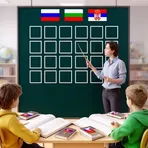


Surface Forms
Morphology
Cyrillic = Cyril (opaque) = Cyril + ic
Formed by attaching the adjectival suffix '-ic' to the proper name 'Cyril'; the link to the script/alphabet is cultural/etymological and not predictable for a B1 learner.
Etymology
Cyrillic is named after Saint Cyril, a man who helped bring a written alphabet to the Slavic people long ago. So when something is called 'Cyrillic', it means it is written in that alphabet used for Russian, Bulgarian, and other languages.