

Cyrilla racemiflora
- noun
- Specialized
- Many landscapers appreciate Cyrilla racemiflora for its vivid autumn foliage and delicate white flowers.
Examples
-
Cyrilla racemiflora thrives in moist, acidic soils common to southern coastal regions.
-
The garden's wetland area features a beautiful Cyrilla racemiflora in full bloom.
-
The Cyrilla racemiflora blooms beautifully in the spring.
-
Many gardeners appreciate the Cyrilla racemiflora for its unique foliage.
-
Cyrilla racemiflora is known for its striking clusters of white flowers that bloom in the spring.
-
In the landscaping design, Cyrilla racemiflora adds vibrant colors with its orange to crimson foliage in autumn.
-
Gardeners often choose Cyrilla racemiflora for its ability to thrive in wetland areas and its ornamental beauty.
Synonyms
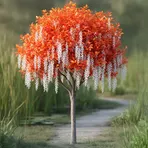
A small tree with thin clusters of white flowers and bright orange-red leaves
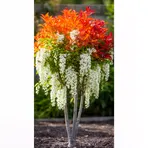
A small tree or shrub with groups of white flowers and leaves that turn orange and red

A group of flowering trees and shrubs with one species, twisted petals, and wingless fruit found in warm regions
Surface Forms
Morphology
cyrilla + racemiflora
This is a scientific binomial combining the genus name Cyrilla (a shrub) with a Latin descriptive epithet racemiflora (literally ‘raceme‑flowered’), so the meaning is compositionally describable if the learner recognizes the Latin botanical element. However, the species epithet is not an ordinary English word and requires specialist/Latin knowledge, so the relation is partially clear but not fully predictable to an average B1 learner.
Etymology
Cyrilla racemiflora is a Latin plant name that points to how the plant looks. The second part, racemiflora, means 'many small flowers on a single thin stem', like a tiny bunch of grapes, so the name helps you remember the shrub's slender white flower clusters and bright autumn leaves.

