
Cynocephalidae
- noun
- /ˌsɪnoʊˈsɛfəlɪˌdeɪ/
- Specialized
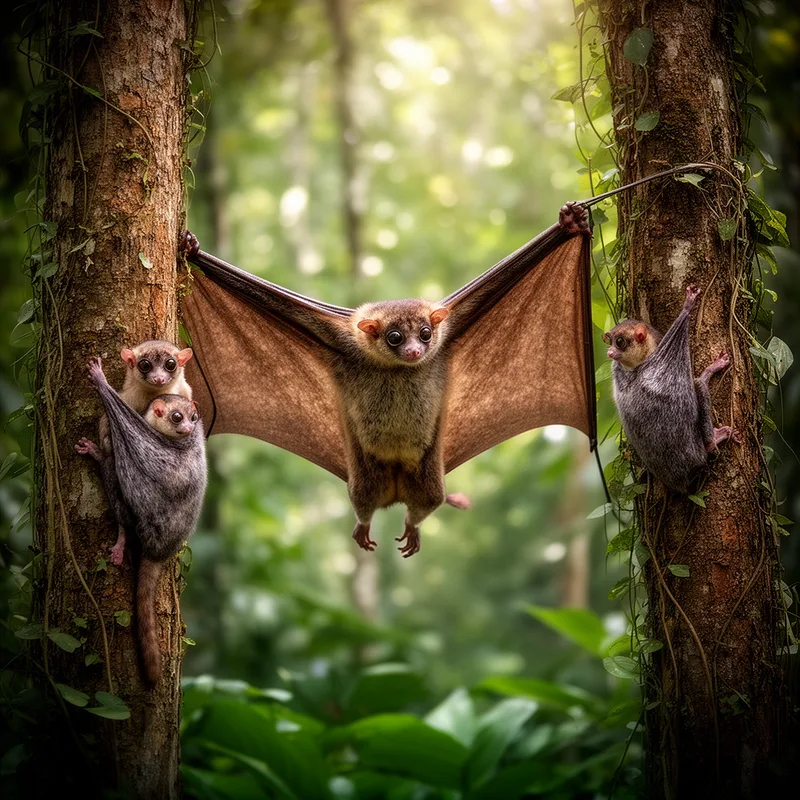
- Members of Cynocephalidae are sometimes called flying lemurs, although they are not lemurs.
Examples
-
The family Cynocephalidae consists of just two living species of colugos.
-
Scientists have long debated the evolutionary relationships of Cynocephalidae within the mammalian tree.
-
The Cynocephalidae family includes fascinating animals.
-
Did you know that the Cynocephalidae can glide between trees?
-
The family Cynocephalidae is known for its ability to glide seamlessly from one tree to another.
-
Colugos, which belong to Cynocephalidae, are often recognized for their unique body structure and gliding skills.
-
Scientists classify Cynocephalidae within the order Dermoptera, emphasizing their unique adaptations for life in the trees.
Surface Forms
Morphology
Cynocephalidae = cyno + cephal + idae
This is a specialized taxonomic name formed from Greek combining forms ('cyno-' + 'cephal-') plus the scientific family suffix '-idae'; the components are not standalone English words and the meaning is not recoverable for an average B1 learner.
Etymology
Cynocephalidae comes from Greek parts cyno- 'dog', -cephal- 'head', and the animal-family ending -idae. It literally means 'dog-headed family' because early scientists thought these gliding mammals had a dog-like head, so the name points to their head shape today.

