
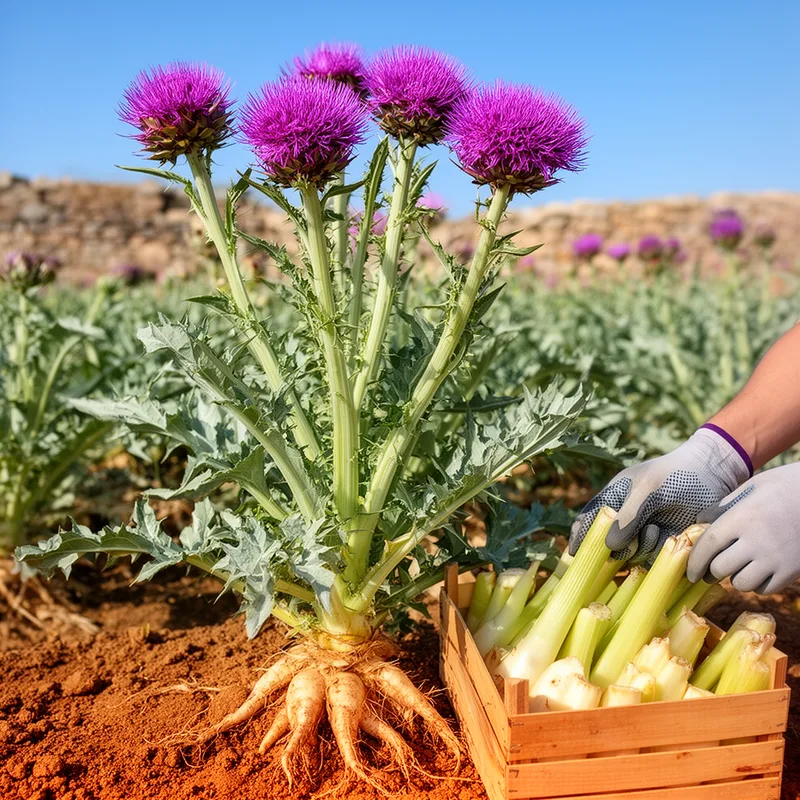
Cynara cardunculus
- noun
- Specialized
- Have you ever tasted Cynara cardunculus dishes?
Examples
-
Experts say that Cynara cardunculus can be blanched to reduce its natural bitterness before eating.
-
Gardeners in southern Europe sometimes grow Cynara cardunculus for its ornamental purple flowers.
-
The thick stalks of the Cynara cardunculus are often used in Mediterranean cooking.
-
The Cynara cardunculus is often grown in Mediterranean gardens.
-
The chef used Cynara cardunculus to create a delicious dish featuring its tender leafstalks.
-
Many people enjoy braising Cynara cardunculus leaves as a unique addition to their culinary repertoire.
-
Cynara cardunculus, also known as cardoon, is often grown in Mediterranean gardens for its ornamental and edible qualities.
Synonyms


 1
9.9
1
9.9
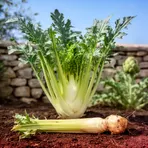
A Mediterranean plant related to the artichoke with thick edible stalks and roots
Surface Forms
Morphology
Cynara + cardunculus
This is a Linnaean binomial (genus + species): knowing 'Cynara' as a genus that includes artichokes and cardoons would allow a learner to infer this is a kind of plant in that group, so there is some compositional cue. However, the species epithet 'cardunculus' is not a transparent English word and the detailed botanical description (southern European, spiny leaves, edible leafstalks/roots) requires specialized knowledge, so the full meaning is not predictable to a B1 learner.
Etymology
Cynara cardunculus may come from old words where Cynara means 'artichoke' and cardunculus means 'small thistle'. So the name paints a clear picture of a thistle-like plant with edible stalks, which is why the word is used for the food plant we call 'cardoon' today.