
Cyclops
 4
9.0
4
9.0

- noun
- /ˈsaɪklɒps/
- Literature
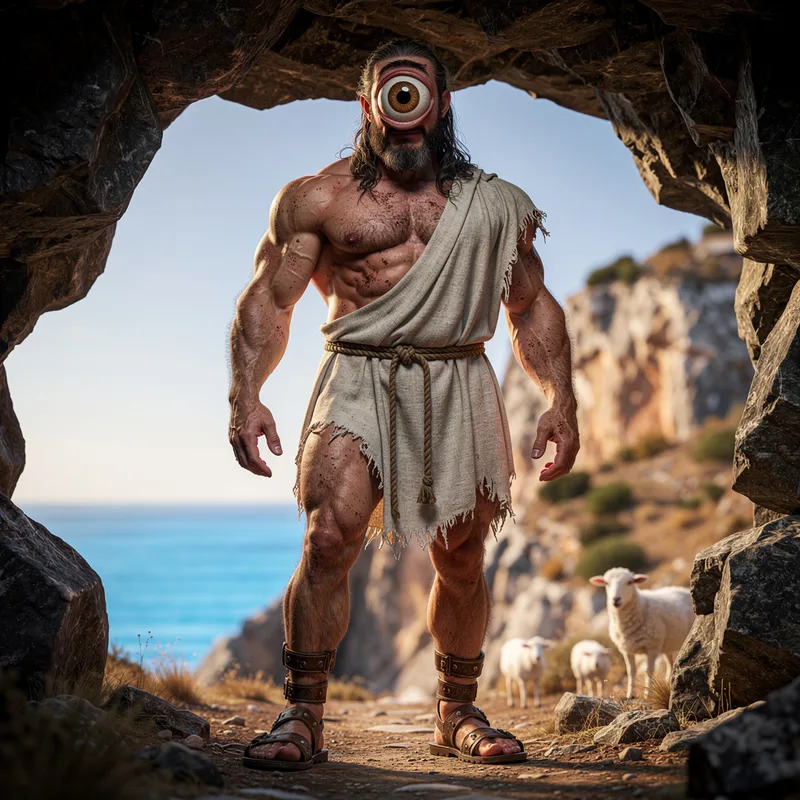
- In Greek mythology, a Cyclops is known for having a single eye in the center of its forehead.
- the eye of a Cyclops
Loading YouTube…
Watch on YouTubeBecause this is the thing that's being valued in him as a hero at the moment, that they plunged the stick into the eye of the Cyclops.
- Because this is the thing that's being valued in him as a hero at the moment, that they plunged the stick into the eye of the Cyclops.
Examples
-
Many of these, such as Knossos, Mycenae, Pylos, and Tiryns, are on every tourist schedule today with impressive ruins and 'cyclopean walls' (so called because they were so large that they could only have been built by the legendary Cyclops).
Blog text (11) -
Many ancient tales describe the fearsome Cyclops as a one-eyed giant who lived on remote islands.
-
You want me to lead you to a Cyclops?
-
The island of the Cyclops is in the Odyssey where each person is each cyclops is totally on their own.
-
In the Odyssey, you remember, Odysseus finds himself on the island of the Cyclopes, those one eyed monsters.
-
The story of Odysseus includes a famous encounter with the giant Cyclops, Polyphemus.
Synonyms

A creature with one eye, like a Cyclops
Surface Forms
Morphology
Etymology
Cyclops comes from the Greek parts kyklos 'circle' and ops 'eye', the same kyklos you see in cycle. Picture a single round eye like a wheel in the middle of the forehead, and that is why a Cyclops is a one-eyed giant.