

Cyathea medullaris
- noun
- Specialized
- In New Zealand forests, the Cyathea medullaris stands out for its towering black trunk and graceful foliage.
Examples
-
The lush fronds of the Cyathea medullaris make it a dramatic feature in subtropical gardens.
-
Botanists studied the white undersides of Cyathea medullaris leaves to understand their adaptation to low light.
-
The Cyathea medullaris is often found in lush, tropical forests.
-
Many gardeners admire the Cyathea medullaris for its striking appearance.
-
In New Zealand forests, the Cyathea medullaris stands out for its towering black trunk and graceful foliage.
-
The lush fronds of the Cyathea medullaris make it a dramatic feature in subtropical gardens.
-
Many gardeners admire the Cyathea medullaris for its striking appearance.
Synonyms

A large tree-like fern from New Zealand and Australia with white undersides on its divided leaves
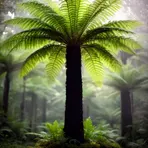
A large fern with a tall dark trunk and long feather-like leaves that form a crown

A tall fern with divided leaves and shiny silver undersides
Surface Forms
Morphology
Cyathea + medullaris
This is a Latin binomial: knowing 'Cyathea' (a genus of ferns) would allow a learner to infer it refers to a type of fern, so part of the meaning is recoverable. However, the specific epithet 'medullaris' is obscure to a B1 learner and the detailed properties (tall, showy, native range) are not predictable from the parts, so the overall meaning is only partially transparent.
Etymology
Cyathea medullaris may come from old scientific words that describe the plant: Cyathea is the name for tree ferns and medullaris refers to a pale centre or underside, which matches this fern's white undersides. So the name paints an easy picture — a tall fern with a dark trunk and pale undersides — to help you remember the species.

