

Cuterebridae
- noun
- /ˌkjuːtəˈrɛbɪdeɪ/
- Specialized
- The larvae of the Cuterebridae family are often found infesting mammals such as rodents and rabbits.
Examples
-
In North America, species from the Cuterebridae family are known to be a common threat to domestic pets.
-
Researchers study the lifecycle of Cuterebridae to understand their impact on wildlife and ecosystems.
-
No one has seen Alouattamyia mate in the wild, but males in the Cuterebridae family typically develop more quickly than females do and then gather in trees or other high places.
Academic text (2003) -
Catts had written an extensive review describing the members of Cuterebridae, the New World family to which both Dennatobia and Alouattamyia belong.
Academic text (2003)
Synonyms
 1
9.9
1
9.9

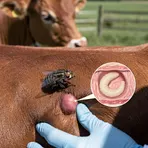
A large hairy fly whose larvae grow under the skin of mammals and cause pain
Surface Forms
Morphology
Cuterebridae = Cuterebra (opaque) = Cuterebra + idae
The formation is a specialist taxonomic construction (genus name + '-idae'), which is not productive or familiar to general learners, so the meaning 'a family of Cuterebra' is not guessable by an average B1 learner.
Etymology
Cuterebridae comes from the name Cuterebra, made of Latin cutis 'skin' and terebra 'borer', so it suggests a 'skin borer'. The ending -idae means 'family' or 'group', so Cuterebridae helps you remember these botflies have young that develop under the skin of mammals.