
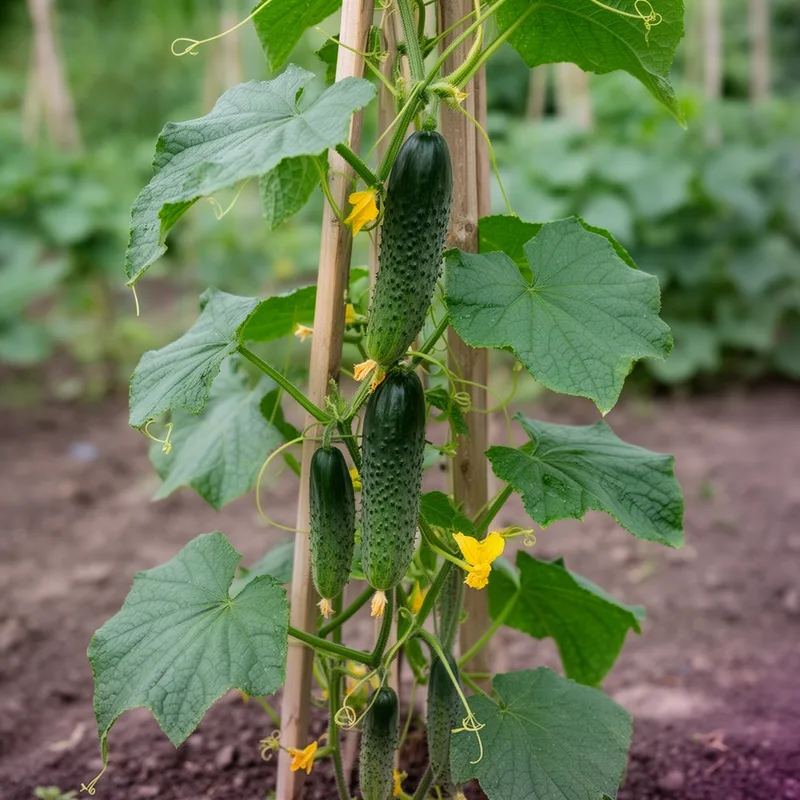
Cucumis sativus
- noun
- Specialized
- The fruits of Cucumis sativus are popularly eaten fresh or pickled.
Examples
-
Farmers have been cultivating Cucumis sativus for thousands of years.
-
The Cucumis sativus is commonly used in salads.
-
Botanists classify the Cucumis sativus as part of the gourd family.
-
Many gardeners grow Cucumis sativus in their backyards.
-
Farmers have been cultivating Cucumis sativus for thousands of years to produce fresh cucumbers.
-
The fruits of Cucumis sativus are popularly eaten fresh or pickled, making them a staple in many dishes.
-
Many gardeners grow Cucumis sativus in their backyards for use in salads and sandwiches.
Synonyms

 88
1.0
88
1.0

A long green fruit with crisp watery flesh often eaten raw or pickled

A climbing garden plant with long green vegetables used in salads
Surface Forms
Morphology
Cucumis + sativus
This is a Latin binomial (genus + species) rather than a normal English compositional phrase; knowing 'Cucumis' only signals a plant genus but the species epithet 'sativus' is not a common English word or given definition, so the specific meaning 'cucumber' cannot be derived. Scientific names follow taxonomic conventions unfamiliar to a typical B1 learner, making the overall meaning unpredictable from the parts.
Etymology
Cucumis sativus comes from old Latin words: Cucumis meant 'cucumber' and sativus meant 'sown' or 'grown', so the name simply says a 'cucumber that people grow'.