

Cucumis melo reticulatus
- noun
- Specialized
- The Cucumis melo reticulatus thrives in warm climates and produces sweet, succulent fruit.
Examples
-
I bought a fresh Cucumis melo reticulatus at the farmer's market.
-
He prefers the taste of Cucumis melo reticulatus to other types of melons.
-
Botanists often use Cucumis melo reticulatus to refer to certain varieties of muskmelons.
-
The Cucumis melo reticulatus is known for its sweet flavor.
-
He prefers the taste of Cucumis melo reticulatus to other types of melons.
-
The Cucumis melo reticulatus thrives in warm climates and produces sweet, succulent fruit.
-
I bought a fresh Cucumis melo reticulatus at the farmer's market.
Synonyms

 86
1.0
86
1.0

A large round or oval fruit with thick skin and soft sweet inside like a watermelon

 1
5.3
1
5.3
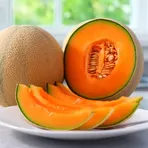
A sweet, fragrant fruit with orange flesh like a cantaloupe
 1
3.7
1
3.7
A round fruit with sweet orange flesh like a cantaloupe

A sweet melon with a net-like skin and green flesh

A sweet melon with green flesh and a net-like rind

A melon with rough netted skin and sweet green flesh

A vine that makes sweet melons like cantaloupe or honeydew

A climbing plant that grows melons like watermelons or cantaloupes
Surface Forms
Morphology
Cucumis + melo + reticulatus
This is a scientific Latin binomial composed of genus + species/varietal epithets: 'Cucumis' (a gourd genus) + 'melo' (melon) + 'reticulatus' (net-like/reticulated). If a learner knows these constituent Latin roots or taxonomic conventions they can reconstruct the meaning (a netted/reticulated melon), but these are domain-specific and not part of ordinary English compositional patterns, so the relation is only partially transparent to an average B1 learner.
Etymology
Cucumis melo reticulatus comes from Latin words: Cucumis ('cucumber'), melo ('melon') and reticulatus ('netted'). It names a type of muskmelon with a thin, netted skin and sweet green flesh, so the name literally describes the fruit's look and taste.