
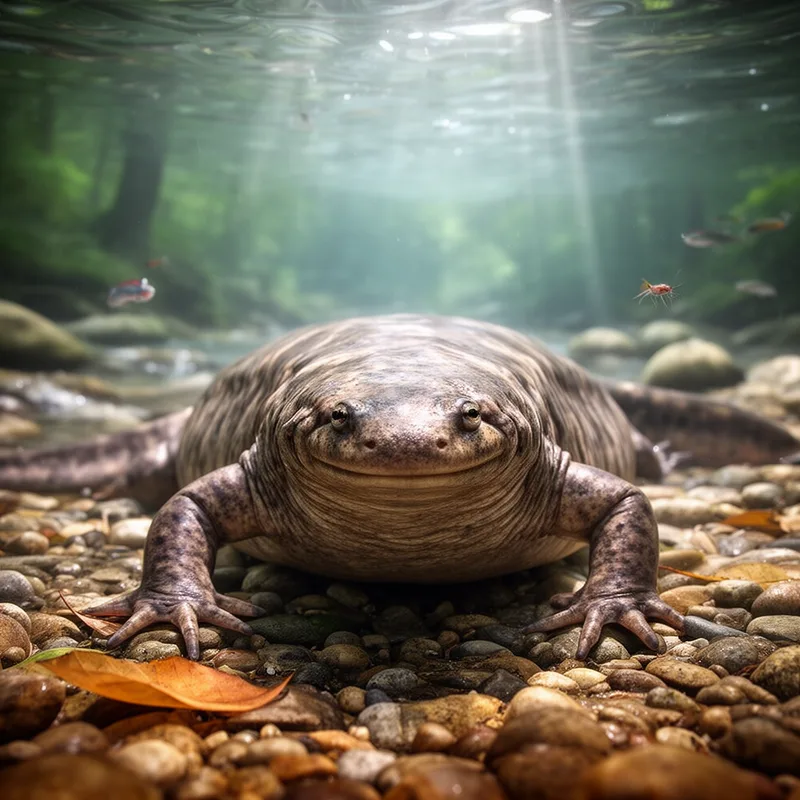
Cryptobranchus alleganiensis
- noun
- /ˌkrɪptoʊˈbræŋkəs ˌæləˌɡænɪˈɛn.sɪs/
- Specialized
 :
Cryptobranchus alleganiensis
:
Cryptobranchus alleganiensis
- The Cryptobranchus alleganiensis is the largest salamander in North America.
Examples
-
Researchers observed several Cryptobranchus alleganiensis in the clear waters of the Appalachian streams.
-
The Cryptobranchus alleganiensis is often found in clean, fast-flowing rivers.
-
Conservationists are working to protect the Cryptobranchus alleganiensis from habitat loss.
-
Have you ever seen a Cryptobranchus alleganiensis in its natural habitat?
-
Conservationists are working to protect the Cryptobranchus alleganiensis from habitat loss.
-
Researchers observed several Cryptobranchus alleganiensis in the clear waters of the Appalachian streams.
-
The Cryptobranchus alleganiensis is the largest salamander in North America.
Synonyms
 1
9.9
1
9.9

A large water salamander with a flat body and wrinkled skin that lives in eastern North American rivers
Surface Forms
Morphology
Cryptobranchus + alleganiensis
This is a Latin scientific binomial combining a genus name ('Cryptobranchus' — large salamanders) with a species epithet. Knowing the constituents would let a learner infer it names a particular salamander (so the composition is partly transparent), but the specific sense (the common name 'hellbender' and its habitat/nativity) and the meaning of 'alleganiensis' are not recoverable from everyday English knowledge without biological or Latin background.
Etymology
Cryptobranchus alleganiensis gets its name from old Greek words: Cryptobranchus means 'hidden gill' and alleganiensis points to the 'Allegheny' area where it was first found. That helps you remember this animal is a very large water salamander with loose, folded skin like hidden gills and that it lives in eastern streams.