
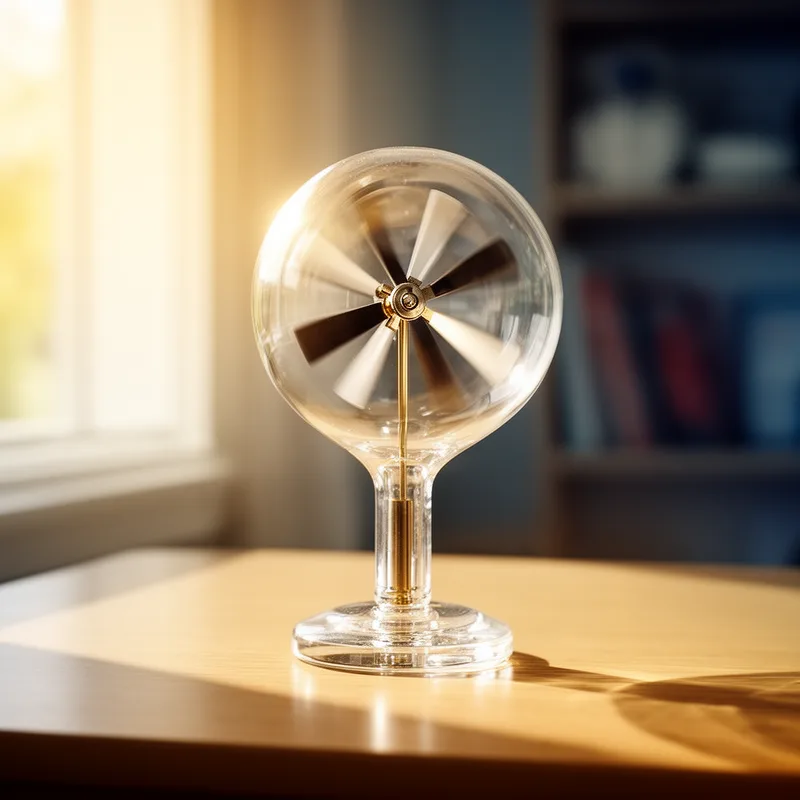
Crookes radiometer
- noun
- /ˈkruːks ˈreɪdiˌɒmɪtər/
- Specialized
- A Crookes radiometer can illustrate the conversion of light energy into mechanical motion.
Examples
-
The scientist demonstrated how the Crookes radiometer spun faster in direct sunlight.
-
The Crookes radiometer spins in sunlight.
-
As a child, I was fascinated by the Crookes radiometer in my grandfather's study.
-
A Crookes radiometer spins.
-
The Crookes radiometer provides a visual demonstration of how light can produce motion.
-
In science class, we observed how the Crookes radiometer spins when exposed to a lamp.
-
He explained the principles of energy conversion using a Crookes radiometer as an example.
Synonyms

 1
8.5
1
8.5

A device that measures energy from light or heat
Surface Forms
Morphology
Crookes + radiometer
The headword combines a proper name ('Crookes') with 'radiometer' (an instrument for measuring radiation), so a learner who knows 'radiometer' will infer this is a particular kind of radiometer. However, the specific behavior (light-driven spinning vanes) and the eponymous naming are not predictable from the constituents alone, making the meaning only partly derivable.
Etymology
Crookes radiometer is named after Sir William Crookes and is a small glass bulb with tiny black and white vanes that spin when light shines on them. The image of the dark and light vanes turning in sunlight helps you remember that this device shows how 'light' can make things move.