
Crinoidea
- noun
- /krɪˈnɔɪdiə/
- Specialized
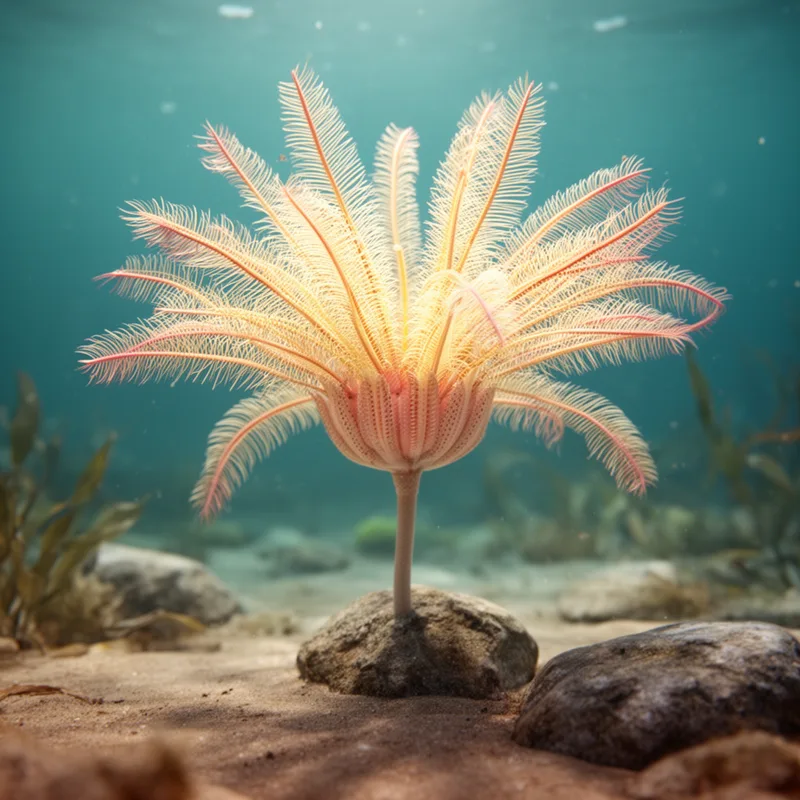
- The distinctive feathery arms of Crinoidea help them capture plankton from the water.
Examples
-
Scientists discovered several new species within the Crinoidea during the deep-sea expedition.
-
Fossilized Crinoidea are frequently found in Paleozoic sedimentary rocks.
-
The Crinoidea class includes both sea lilies and feather stars.
-
Many Crinoidea can be found in deep ocean waters.
-
The Crinoidea, also known as sea lilies, are often found in deep ocean waters.
-
Researchers studied the Crinoidea to understand their unique feeding mechanisms.
-
During a dive, we spotted a beautiful Crinoidea gracefully waving its feathery arms.
Surface Forms
Morphology
Crinoidea = crinoid (opaque) = crino + idea
The form is a scientific/taxonomic formation using the combining form 'crino-' and the taxonomic suffix '-idea', which is not a productive or transparent derivation for average learners.
Etymology
Crinoidea comes from Greek krinon meaning 'lily' and the ending -oidea meaning 'like' or 'in the shape of'. These animals are often called 'sea lilies' or feather stars because their cup-like bodies and feathery arms look like a flower, so the name describes how they appear.

