
Cretaceous
 5
9.9
5
9.9

- adjective
- /krɪˈteɪʃəs/
- Specialized
- Of course, if you're familiar with the Cretaceous Period, you probably know all of this.
- Cretaceous period
- Cretaceous extinction
- late Cretaceous
Examples
-
80 million years ago during the cretaceous period, these plains were the floor of a huge inland sea.
-
The Cretaceous Period of Earth's history ended with a mass extinction, famous for wiping out the dinosaurs.
Blog text (21) -
As serious as anybody you ever met in the middle of the Cretaceous forest.
Fiction book (1991) -
Try to imagine yourself in the Cretaceous Period.
Fiction book (1993) -
But in the Cretaceous, more progressive, large-headed, larger-brained dinosaurs appeared, and vegetation changed.
Academic text (1991) -
Genuine feathers on a Cretaceous ornithomimid would suggest that feathers (and wings to hold them) evolved earlier than previously thought.
Blog text (15) -
Pictured here are, from left to right, a hadrosaurus, a talarurus, and an albertasaurus standing in front of the Cretaceous mural.
Academic text (1992) -
The fossils of the dinosaurs are most commonly found in Cretaceous rock layers.
-
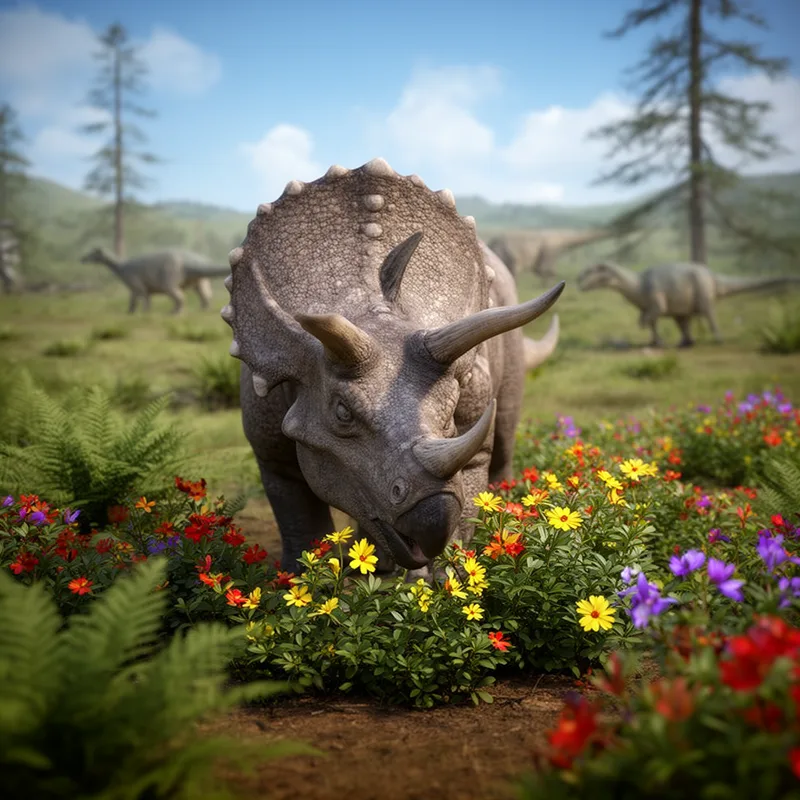
During the Cretaceous Period, many species of flowering plants began to appear.
-
The vibrant ecosystems of the Cretaceous thrived with various dinosaurs and early mammals.
Compounds

- Specialized
3
7.7
The time about 145 to 66 million years ago when many dinosaurs died out and flowering plants became common
Surface Forms
Morphology
Cretaceous = cret + aceous
Although the word contains a learned suffix and a historical root connected with chalk, the geological adjective is not meaningfully recoverable for an average learner from its parts.
Etymology
Cretaceous comes from the Latin word creta, meaning 'chalk', because many thick white chalk layers were formed then. So when we call a rock or fossil Cretaceous, we mean it is from the time when those chalk deposits were made and dinosaurs and flowering plants lived.