
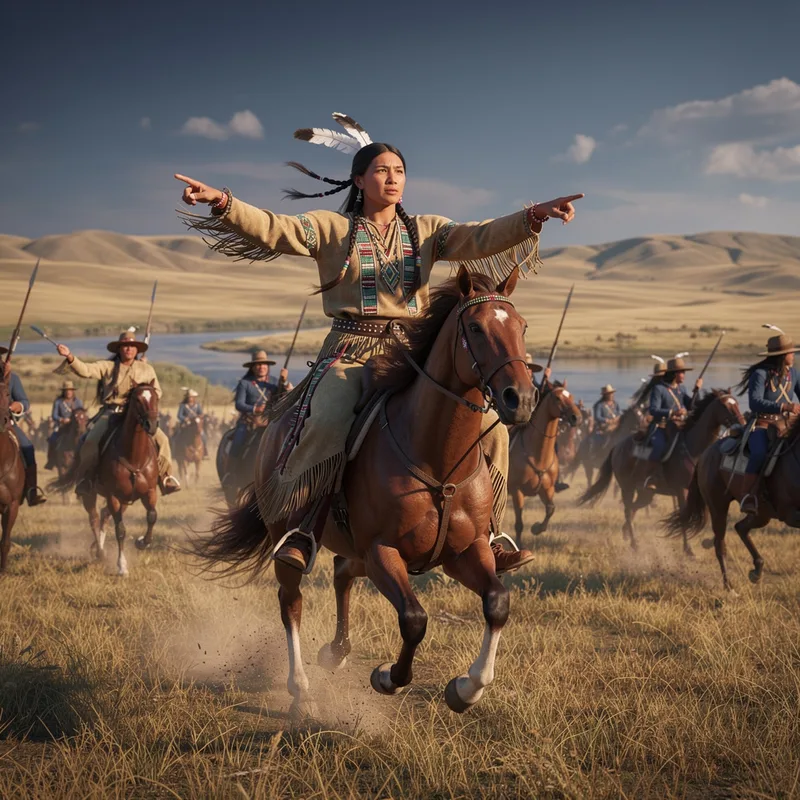
Crazy Horse
 7
7.5

- proper noun
- /ˈkreɪzi hɔrs/
- Crazy Horse led his warriors to victory against General Custer at the Battle of the Little Bighorn.
Examples
-
As a chief of the Oglala Lakota, Crazy Horse is remembered for his fierce bravery and resistance.
-
Not far away, she said, there was another mountain carving they could maybe get a glimpse of, a giant figure of Crazy Horse.
Fiction book (1995) -
With war brewing between Crazy Horse and Custer, I wanted my husband on the right side of every treaty ever written.
Fiction book (1995) -
Crazy Horse was there, playing poker for pony stakes with the Custer brothers—the General, Tom, Boston, and James Calhoun.
Fiction book (1995) -
In 1876, Crazy Horse united various tribes to resist the U.S. government's encroachment on their lands.
Synonyms
A Sioux chief who defended the Black Hills and fought at Little Bighorn
Surface Forms
Morphology
Crazy + Horse
This is a proper name referring to a specific historical Lakota chief; knowing the words “crazy” and “horse” would not allow a B1 learner to infer the personhood, historical role, or cultural referent. Proper names are arbitrary and non-compositional across languages, so the overall meaning cannot be derived from the constituent words.
Etymology
Crazy Horse is the English form of his Lakota name and is said to mean 'His horse is crazy'. One story says he got the name after a horse he rode behaved wildly in battle, and that strong image helps explain why he is remembered as a brave 'leader'.