

Corydalus cornutus
- noun
- /ˌkɔːrɪˈdeɪləs kɔːrˈnuːtəs/
- Specialized
- Fishermen often use the larvae of Corydalus cornutus as bait.
Examples
-
The male Corydalus cornutus is easily recognized by its large mandibles.
-
Entomologists study Corydalus cornutus to understand aquatic insect life cycles.
-
The Corydalus cornutus is known for its impressive mandibles.
-
Have you ever seen a Corydalus cornutus up close?
-
Fishermen often use the larvae of Corydalus cornutus as bait.
-
The male Corydalus cornutus is easily recognized by its large mandibles.
-
Entomologists study Corydalus cornutus to understand aquatic insect life cycles.
Synonyms
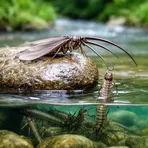
A large soft-bodied insect whose male has very long thin jaws and larvae that live in streams used for bait

Large insect with a soft body and long jaws whose young live in water and are used as fishing bait
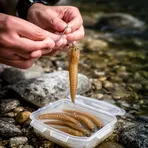
A large soft insect whose young live in water and are used as fishing bait
Surface Forms
Morphology
Corydalus + cornutus
This is a Latin binomial: the genus name 'Corydalus' clearly identifies a dobsonfly, so that part is informative to learners; however the species epithet 'cornutus' is given as not found in the dictionary and is Latin (meaning 'horned'), so its contribution is not accessible to an average B1 learner. Because part of the meaning (the general taxonomic identity) is transparent but the specific species sense relies on specialized/Latin knowledge, the overall expression is only partially predictable.
Etymology
Corydalus cornutus may come from old words meaning 'horned' because the species name cornutus points to the male's long, horn-like jaws. That strong picture helps you remember it is a large dobsonfly whose young live in water and are often used as 'bait'.

