
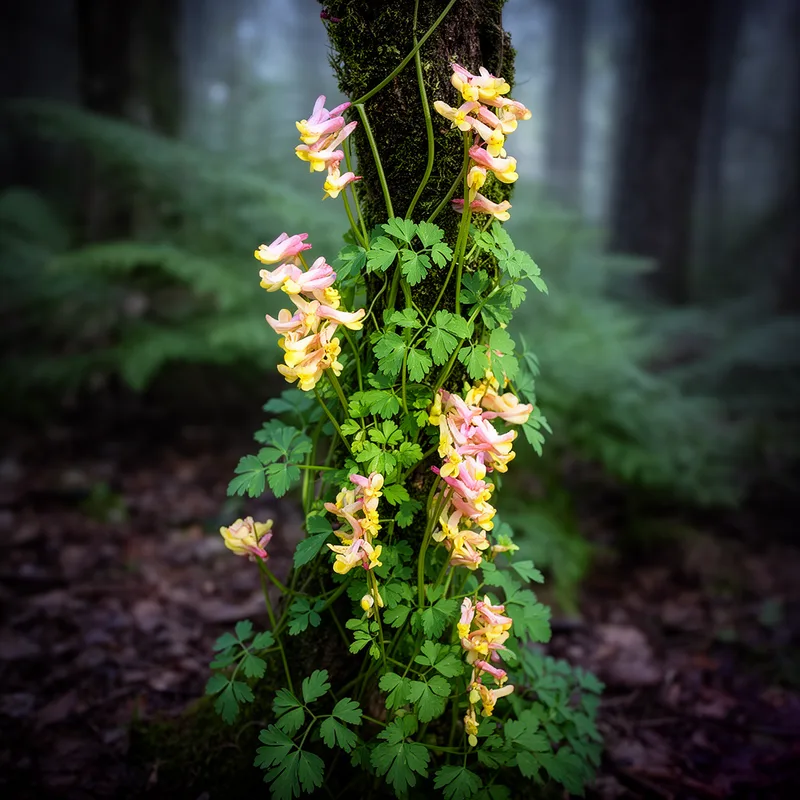
Corydalis claviculata
- noun
- Specialized
- Gardeners sometimes cultivate Corydalis claviculata for its attractive climbing habit.
Examples
-
Botanists admire the delicate two-toned flowers of Corydalis claviculata in springtime.
-
Corydalis claviculata features vibrant yellow and pink flowers that bloom in the forest during the spring.
-
Corydalis claviculata grows wild in the damp woods of northern Europe.
-
The Corydalis claviculata blooms beautifully in spring.
-
I saw a Corydalis claviculata in the botanical garden.
-
In my garden, I planted Corydalis claviculata to add a splash of color with its unique climbing growth.
-
Corydalis claviculata is often found climbing among other plants, showcasing its delicate foliage and flowers.
Synonyms

A climbing plant with thin split leaves and small yellow and pink flowers

A climbing yearly vine with divided leaves and clusters of yellow and pink flowers
Surface Forms
Morphology
Corydalis + claviculata
This is a Latin binomial (genus + species) used as a taxonomic name rather than a compositional English phrase. Even if a learner knows 'Corydalis' as a plant genus, the species epithet 'claviculata' is a non‑English Latin form (no dictionary definition provided) and the specific descriptive meaning of the full name is not transparently derivable by a B1 learner.
Etymology
Corydalis claviculata may get its name from older words that make a clear picture: Corydalis is linked to a small bird because the flowers look like a bird's beak, and claviculata points to its small climbing stems. So the name helps you remember this 'climbing plant' with delicate two-toned flowers.

